
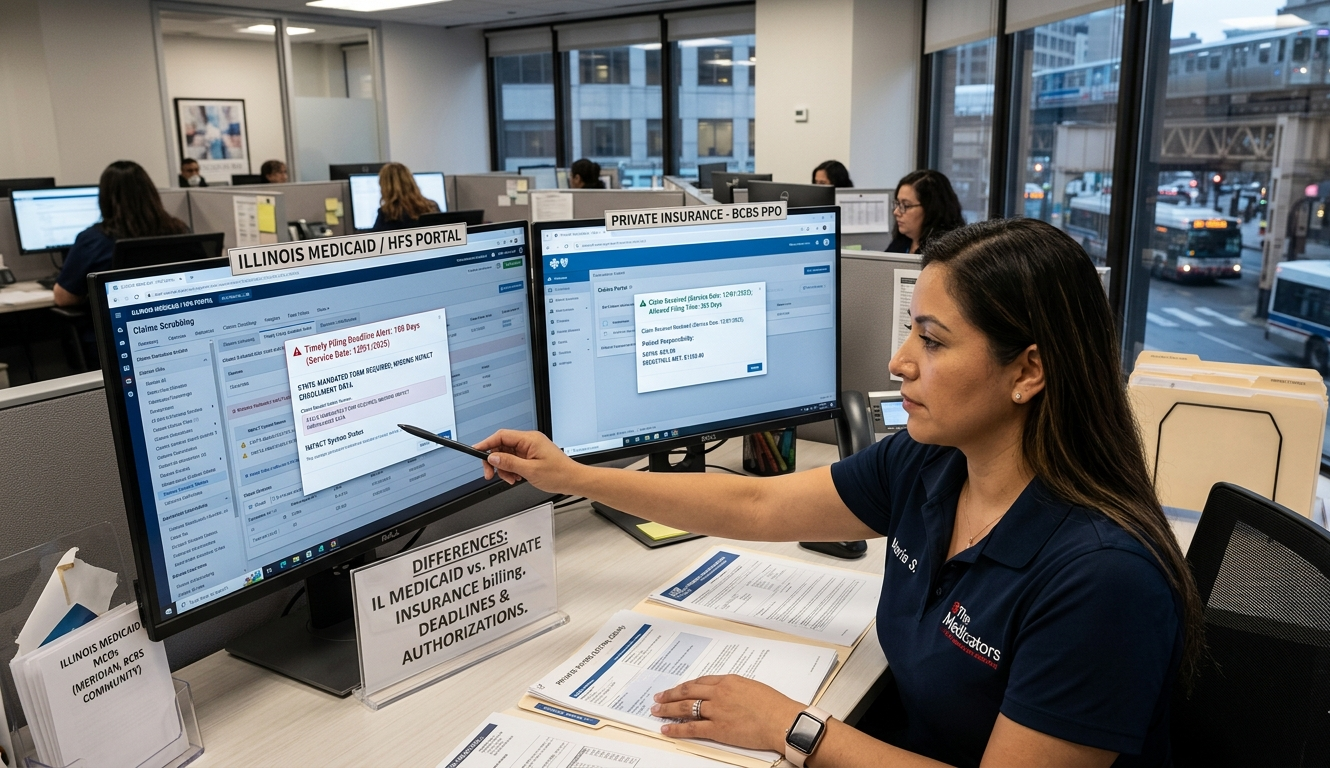
Illinois Medicaid billing differs from private insurance primarily through its stringent regulatory requirements, reimbursement structures, and patient cost-sharing models. While private insurance often involves high deductibles and co-insurance, Illinois Medicaid typically features $0 or minimal copays for members. However, for providers, the billing process is more complex, requiring adherence to strict state-mandated filing limits—often 180 days from the date of service—compared to the longer windows typically allowed by private carriers.
Additionally, Medicaid reimbursement rates are generally lower than private payer schedules, making efficient revenue cycle management essential for practice sustainability. At The Medicators, we specialize in navigating these state-specific nuances to ensure providers capture every dollar they are entitled to.
Key Differences Between Illinois Medicaid and Private Payers
Understanding these distinctions is vital for maintaining a healthy cash flow:
Filing Deadlines: Illinois Medicaid (HFS) enforces a strict 180-day timely filing limit, whereas many private insurers allow up to one year.
Prior Authorization: Medicaid often requires more frequent and specific authorizations for “medical necessity” compared to standard private PPO plans.
Reimbursement Rates: Medicaid operates on a fixed state fee schedule that is typically lower than the negotiated rates found in private insurance contracts.
Patient Responsibility: Medicaid members usually have no out-of-pocket costs, whereas private insurance billing requires extensive patient collections for deductibles and co-insurance.
Credentialing: Enrolling in Illinois Medicaid requires navigating the IMPACT system, which is entirely separate from the credentialing processes used by commercial payers.
The Impact of Managed Care Organizations (MCOs)
In Illinois, most Medicaid members are enrolled in Managed Care Organizations like BlueCross Community or Meridian. This adds a layer of complexity because:
Varying Rules: Each MCO may have slightly different billing addresses and authorization portals.
Claim Clearinghouses: Claims must be routed through specific portals that meet state EDI (Electronic Data Interchange) standards.
Grievance Processes: Appealing a Medicaid MCO denial follows a state-regulated timeline that differs from commercial appeal rights.
Why Choose The Medicators for Your Illinois Billing?
Navigating the HFS and MCO landscape requires specialized knowledge to avoid costly “timely filing” denials. The Medicators offers expert medical billing services tailored to the Illinois healthcare market. We understand the IMPACT system and the specific requirements of Illinois MCOs, ensuring your claims are scrubbed, submitted, and paid without the typical government-sector delays.
Need help managing your Medicaid claims? Visit themedicators.com today. We provide professional billing solutions that help Illinois practices maximize their revenue and reduce administrative stress.
