
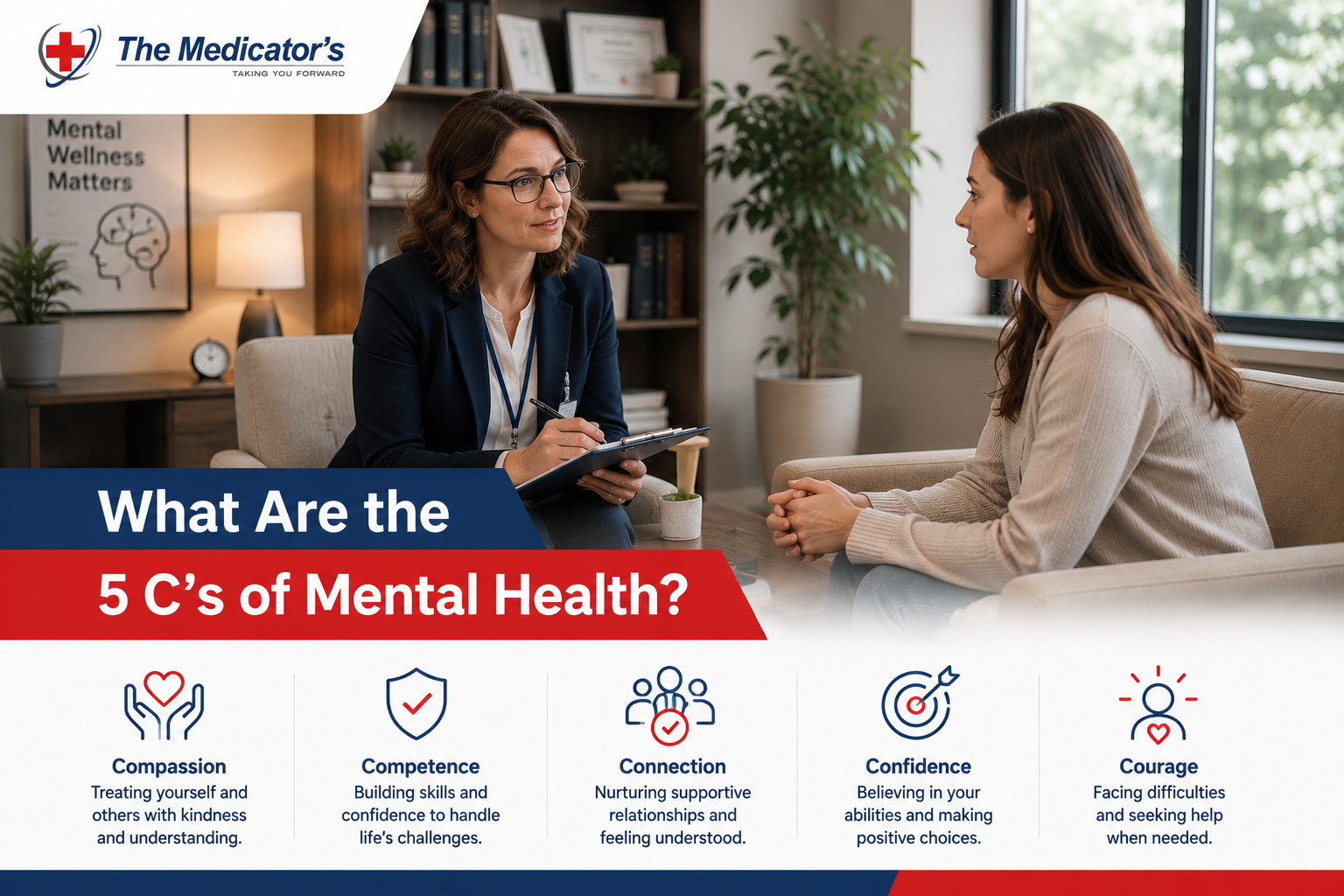
The 5 C’s of mental health Competence, Confidence, Connection, Character, and Caring
represent important areas that support emotional resilience, healthy relationships, and overall psychological well-being. These principles help individuals develop coping skills, maintain support systems, and build the personal strengths needed to handle life’s challenges.
Understanding the 5 C’s of Mental Health
1. Competence: Developing Skills to Manage Life
Competence refers to the ability to solve problems, make decisions, manage responsibilities, and handle daily challenges effectively. In mental healthcare, providers often help patients develop coping strategies, communication skills, and emotional regulation techniques.
2. Confidence: Building Self-Belief
Confidence involves trusting your abilities and recognizing personal strengths. Strong self-confidence can help individuals manage stress, make healthier choices, and stay motivated during difficult situations.
3. Connection: Creating Supportive Relationships
Connection focuses on meaningful relationships with family, friends, communities, and healthcare providers. Strong social support can improve treatment engagement and help individuals feel understood and supported.
4. Character: Developing Values and Responsibility
Character reflects personal values, integrity, empathy, and the ability to make responsible choices. Mental health professionals often consider these factors when supporting long-term behavioral and emotional growth.
5. Caring: Showing Compassion Toward Others
Caring represents empathy, kindness, and concern for others. Positive relationships built on compassion can strengthen emotional health and improve overall well-being.
Why These Concepts Matter in Mental Healthcare
Mental health professionals use these principles to support patient-centered care, but successful treatment also depends on effective practice operations. Administrative barriers such as delayed reimbursements, documentation requirements, and insurance complexity can affect access to behavioral healthcare.
For example, a counseling practice may provide excellent patient support but struggle with Claim Denials caused by incorrect CPT coding, incomplete documentation, or missed Prior Authorization requirements. Efficient Revenue Cycle Management (RCM) allows providers to focus more attention on patient care.
An experienced behavioral health billing specialist understands that accurate Medical Coding, Eligibility Verification, Claim Scrubbing, Payment Posting, and AR Management help create a stable practice environment.
The Medicator’s supports behavioral health providers with specialized Mental Health Billing Services and comprehensive RCM solutions designed to reduce administrative burdens.
If your mental health practice needs help managing billing complexity while improving operational efficiency, The Medicator’s can help optimize your revenue cycle so you can focus on delivering quality care.
