
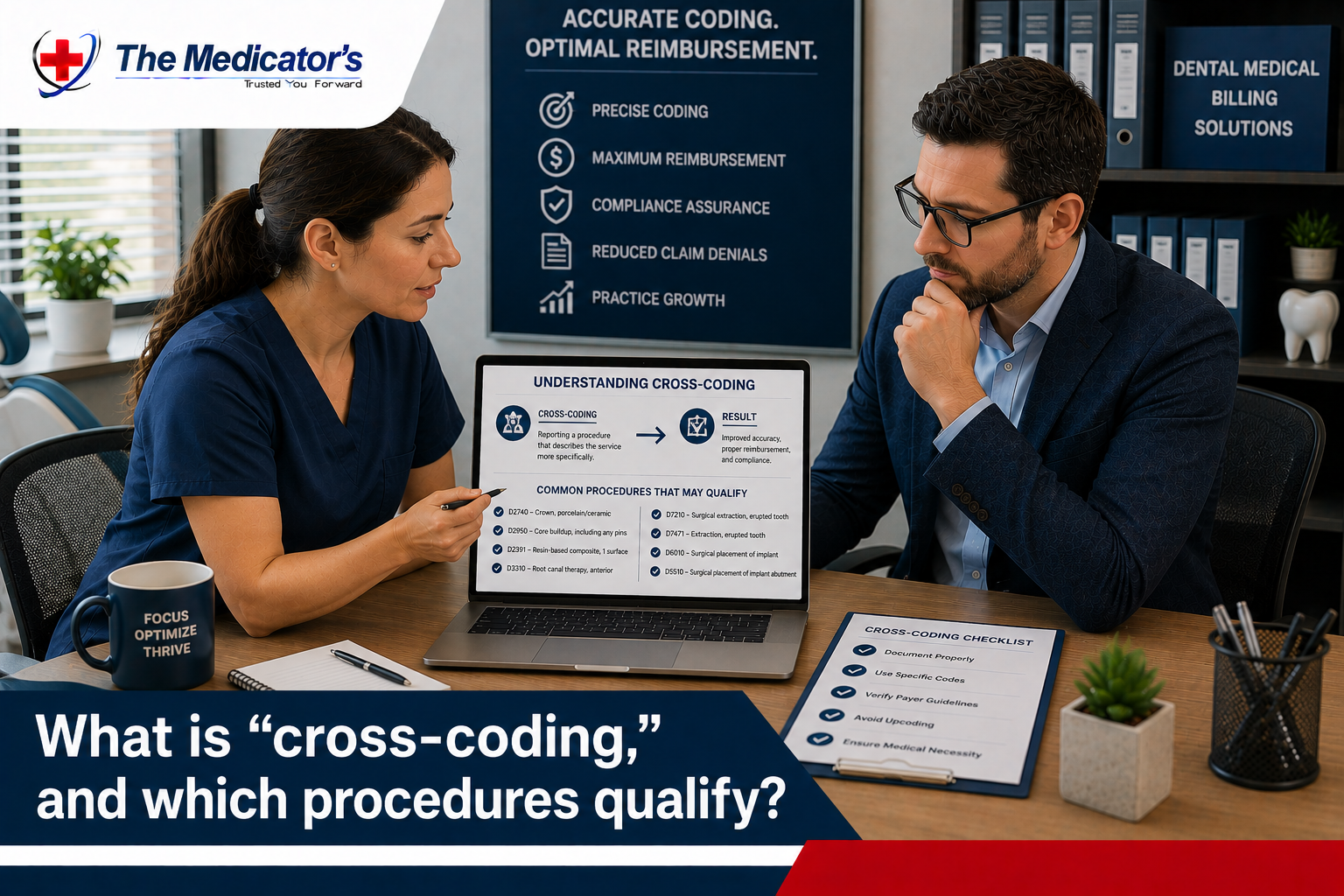
Cross-coding in dental medical billing refers to submitting a dental service to a patient’s medical insurance when the treatment is medically necessary and falls under the patient’s medical benefits. Instead of relying only on dental insurance and CDT coding, the practice may need to use medical diagnosis and procedure codes, such as ICD-10-CM, CPT, or HCPCS codes, depending on the service and payer requirements.
Cross-coding does not mean simply changing a dental code into a medical code to obtain payment. The procedure must genuinely qualify for medical coverage, the diagnosis must support medical necessity, and the documentation must satisfy the medical payer’s requirements.
For practices handling complex medical claims, outsourcing dental medical billing can provide access to specialized billing professionals who understand medical claim submission, coding, payer requirements, and denial follow-up.
How Does Dental Cross-Coding Work?
A typical cross-coding process begins by determining whether the patient’s condition and treatment may be covered under medical insurance.
The billing team generally needs to:
- Review the patient’s medical and dental benefits.
- Identify the underlying medical diagnosis or condition.
- Select the appropriate medical procedure and diagnosis codes.
- Verify authorization and payer-specific requirements.
- Submit supporting clinical documentation when required.
- Track the claim and respond to denials or payer requests.
The exact process varies by insurance plan and procedure, so practices should verify coverage before submitting a medical claim.
Which Dental Procedures May Qualify for Medical Billing?
Not every dental procedure qualifies for medical insurance. Potentially eligible services can include treatment where the primary purpose is related to a medical condition rather than routine dental care.
Examples may include:
- Oral and maxillofacial surgery: Certain surgical procedures may have medical benefits when they treat an underlying medical condition.
- Trauma-related dental treatment: Treatment required because of an accident or facial injury may potentially be covered.
- Medically necessary extractions: Certain extractions may qualify when associated with a covered medical condition.
- Congenital condition treatment: Some procedures addressing congenital abnormalities may be eligible for medical coverage.
- Sleep-related treatment: Certain services associated with medically diagnosed sleep disorders may qualify depending on the plan.
- Pathology or biopsy services: Diagnostic services performed to evaluate a suspected medical condition may be billed medically when payer requirements are met.
Coverage depends on the patient’s plan, diagnosis, medical necessity, documentation, and payer-specific policies.
What Documentation Supports Cross-Coding?
Medical insurance companies may require documentation showing why a dental procedure should be considered medically necessary.
Supporting records can include:
- Patient medical history
- Clinical examination findings
- Diagnosis
- Treatment plan
- Imaging or diagnostic reports
- Operative notes
- Referral documentation
- Prior authorization
- Accident or trauma documentation
The documentation should clearly connect the patient’s medical condition with the service being billed.
What Are Common Cross-Coding Mistakes?
Cross-coding errors can cause medical claims to be denied or delayed. Common problems include:
- Reporting a medical code that does not accurately describe the service
- Using a diagnosis that does not support medical necessity
- Submitting incomplete clinical documentation
- Failing to verify medical benefits
- Missing prior authorization requirements
- Using incorrect patient or payer information
- Assuming every dental procedure qualifies for medical coverage
- Submitting the same service incorrectly to both medical and dental insurance
Cross-coding should always be based on the actual service performed and the applicable payer rules rather than an attempt to increase reimbursement.
How Can Practices Improve Cross-Coding?
Dental practices can improve their cross-coding workflow by establishing a consistent process for identifying potentially medical services before claims are submitted.
A strong process includes:
- Benefit verification: Confirm whether the patient’s medical plan covers the service.
- Clinical review: Determine whether the documentation supports medical necessity.
- Accurate coding: Select codes that correctly represent the diagnosis and procedure.
- Documentation review: Confirm that required clinical records are available.
- Claim submission: Send the claim according to the medical payer’s requirements.
- Denial follow-up: Investigate and appeal eligible claims when appropriate.
How The Medicator’s Supports Dental Medical Billing
The Medicator’s helps healthcare practices manage medical billing processes including coding, claim submission, denial management, payment posting, and accounts receivable follow-up.
For dental practices dealing with medically billable services, outsourcing dental medical billing can help reduce the administrative workload associated with medical claims and payer follow-up.
If you want to identify potential problems affecting your revenue cycle, you can request a free practice analysis. You can also reach The Medicator’s contact team to discuss your billing requirements.
Make Cross-Coding Part of a Stronger Billing Workflow
Cross-coding can help eligible dental and oral healthcare services access medical insurance benefits when the treatment is genuinely medically necessary. However, not every dental procedure qualifies, and successful reimbursement depends on accurate coding, appropriate documentation, benefit verification, and compliance with payer requirements.
If your practice needs help managing medical claims and follow-up, explore The Medicator’s medical billing services or request a free practice analysis to identify opportunities for improving your billing workflow.
