
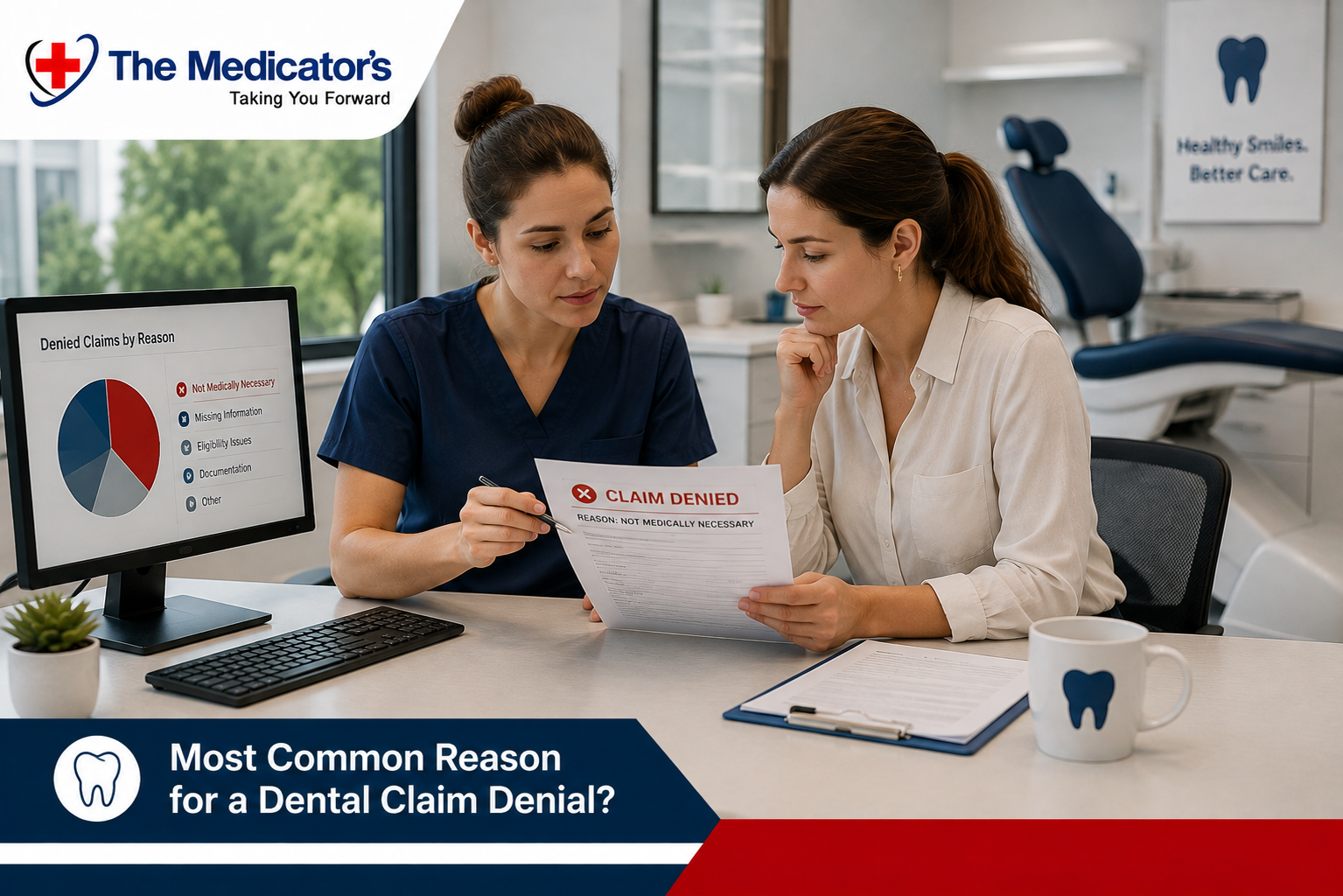
The most common reason for a dental claim denial is incorrect, incomplete, or outdated patient and insurance information. Errors such as an incorrect member ID, patient date of birth, inactive coverage, or missing subscriber details can prevent an otherwise valid claim from being paid. Other frequent causes include missing documentation, frequency limitations, coding errors, and required preauthorization.
For practices managing dental billing, preventing these problems starts before the claim is submitted. Accurate insurance verification and complete patient information can eliminate many avoidable billing issues.
Which Problems Cause Dental Claims to Be Denied?
Dental claims commonly encounter problems because of:
- Insurance information errors: Incorrect member IDs, names, dates of birth, or subscriber details.
- Inactive coverage: The patient’s insurance was terminated or does not cover the service.
- Coordination of benefits: Incorrectly determining which insurer should be billed first.
- Missing documentation: Required X-rays, clinical notes, narratives, or supporting records are absent.
- Frequency limitations: The procedure exceeds the number of services permitted within a specific period.
- Authorization requirements: Certain major procedures may require prior approval.
- Coding mistakes: Incorrect CDT codes, modifiers, tooth numbers, surfaces, or other claim details.
A Dental Billing Example
Suppose a patient schedules a crown procedure. The practice confirms that the patient has active dental insurance but does not check whether the procedure requires preauthorization. The crown is completed and billed correctly, yet the payer denies the claim because the required authorization was never obtained.
This is why verification should include benefits, limitations, authorization requirements, and documentation rules,not simply active coverage.
How Can Dental Practices Reduce Claim Denials?
A reliable workflow should verify insurance before treatment, confirm benefit limitations, review CDT coding, collect required clinical documentation, scrub claims before submission, and monitor unpaid claims after submission.
A specialized dental medical billing workflow can also help practices manage insurance verification, claim submission, denial follow-up, payment posting, and collections. The Medicator’s provides these services through its dental revenue cycle support.
When Should You Consider a Dental Billing Company?
If denials are recurring, AR is aging, or front-office staff are spending too much time on insurance follow-up, outsourcing to a specialized dental billing company may help establish a more consistent billing process. The Medicator’s supports dental practices with eligibility verification, dental coding, claims, denial management, and collections.
The best prevention strategy is simple: verify coverage and requirements before treatment, submit clean claims, and investigate recurring denials at their root cause.
