
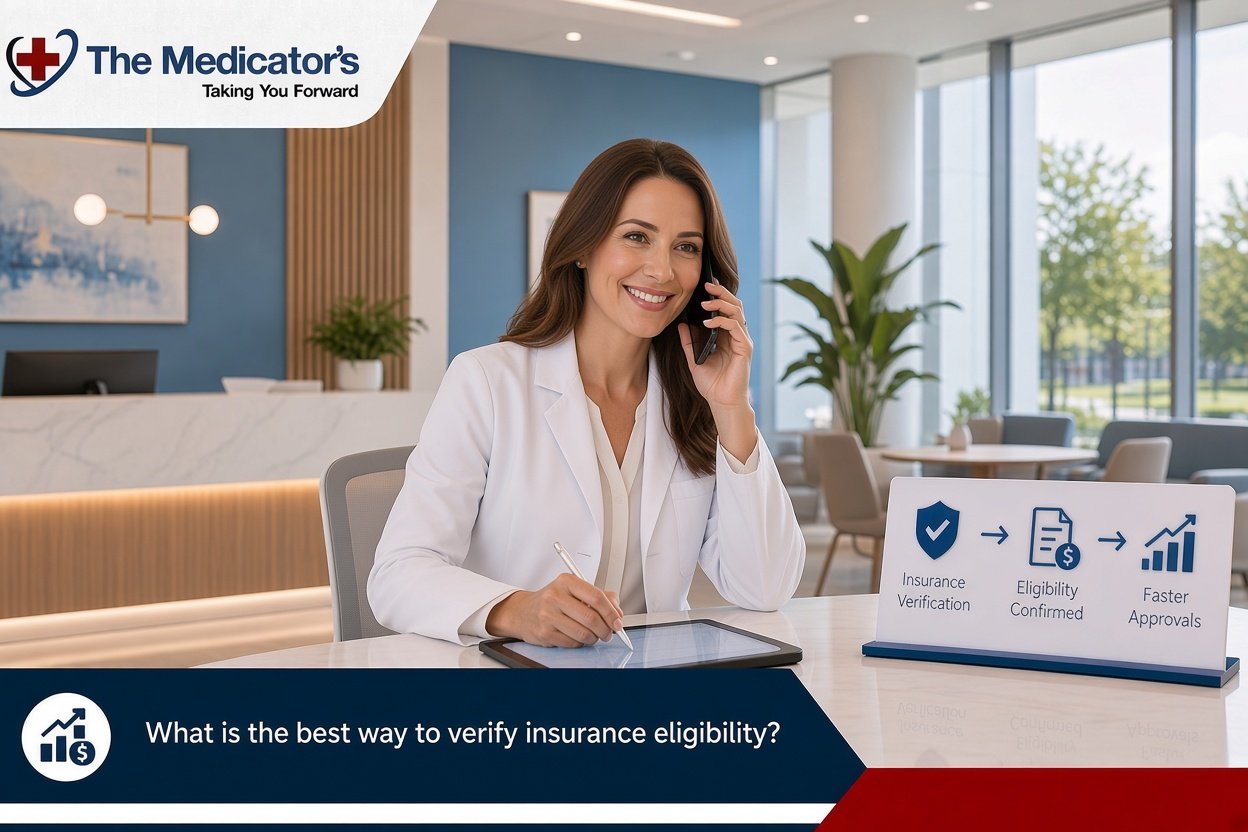
The best way to verify insurance eligibility is to combine an electronic eligibility check with a structured review of benefits, network status, and authorization requirements. Run the check before the appointment, confirm information against the patient’s insurance card, and document the response. For complex cases, use the payer portal or call the insurer rather than relying on an unclear electronic response.
A Reliable Eligibility Verification Workflow
1. Capture accurate insurance information first
Collect the patient’s full name, date of birth, member ID, group number, payer, and a current copy of the insurance card. Small demographic or policy-number errors can cause an otherwise valid eligibility inquiry to return misleading results.
2. Verify more than “active” status
An active policy does not automatically mean a specific service will be covered. Review:
- Effective and termination dates
- Deductible and remaining balance
- Copay and coinsurance
- In-network versus out-of-network status
- Referral requirements
- Prior Authorization requirements
- Coverage limitations relevant to the planned service
For specialty practices, check benefits against the services actually scheduled rather than performing a generic coverage check.
A Practical Example
Suppose a patient is scheduled for an orthopedic procedure. Eligibility may confirm active coverage, but the practice should still determine whether the surgeon and facility are in network, whether the planned CPT code requires authorization, and whether the patient’s deductible or coinsurance applies.
What Should Happen When the Result Is Unclear?
Use a payer portal or telephone verification when an electronic response is incomplete, contradictory, or does not provide enough benefit detail. Record the verification date, effective coverage information, reference number when available, and any relevant payer instructions.
This documentation supports Medical Billing and can help staff investigate later Claim Denials.
Where Technology Fits
Automation can make recurring Eligibility Verification more efficient, but patient information should be handled according to appropriate HIPAA and Compliance requirements. Practices considering AI-assisted RCM workflows can review HIPAA-compliant AI in RCM before introducing automation.
The Medicator’s can help practices build a consistent eligibility workflow that connects verification with authorization, coding, claim submission, and A/R processes.
