
Can Credentialing Services Help Healthcare Organizations Open New Practice Locations?

Yes. Credentialing services play a critical role when healthcare organizations open new practice locations by helping providers enroll with insurance payers, update practice information, and complete required provider enrollment before patient appointments begin. Proper credentialing reduces billing delays, supports compliance, and helps new locations generate revenue sooner. Expanding a Practice Requires More Than Hiring Providers […]
What Are the Most Common Reasons Provider Credentialing Is Delayed?
Provider credentialing is most often delayed by incomplete applications, expired or missing documents, inconsistent information across databases, and slow responses from payers or licensing boards. These delays can postpone insurance enrollment, prevent providers from seeing patients under certain plans, and delay reimbursement for services already being delivered. Where Credentialing Bottlenecks Usually Happen Most delays occur […]
How Long Does Medical Credentialing Usually Take in Different States?

Medical credentialing typically takes 60 to 180 days, although the exact timeline depends on the state, payer, provider specialty, and the accuracy of submitted documents. Delays are often caused by incomplete applications, licensing verification, payer processing times, and missing enrollment information rather than the credentialing process itself. Why Credentialing Timelines Vary Across States There is […]
What Coding Challenges Are Unique to Specialty Healthcare Providers in New York?
Specialty healthcare providers in New York face coding challenges because they work with multiple commercial insurers, Medicare, Medicaid, and specialty-specific payer policies that often have different billing requirements. Accurate Medical Coding, complete documentation, and payer-specific claim validation are essential to reduce Claim Denials, maintain compliance, and improve reimbursement. Why Specialty Coding Is More Complex in […]
How Do New York Insurance Plans Affect Specialty Medical Billing Workflows?

New York insurance plans significantly impact specialty medical billing workflows because providers must manage different payer rules, authorization requirements, documentation standards, and reimbursement processes. Specialty practices need accurate eligibility checks, payer-specific coding knowledge, and proactive claim management to reduce denials and maintain consistent cash flow. Why New York Insurance Requirements Create Billing Challenges New York […]
Why Are My Coding Errors Increasing?
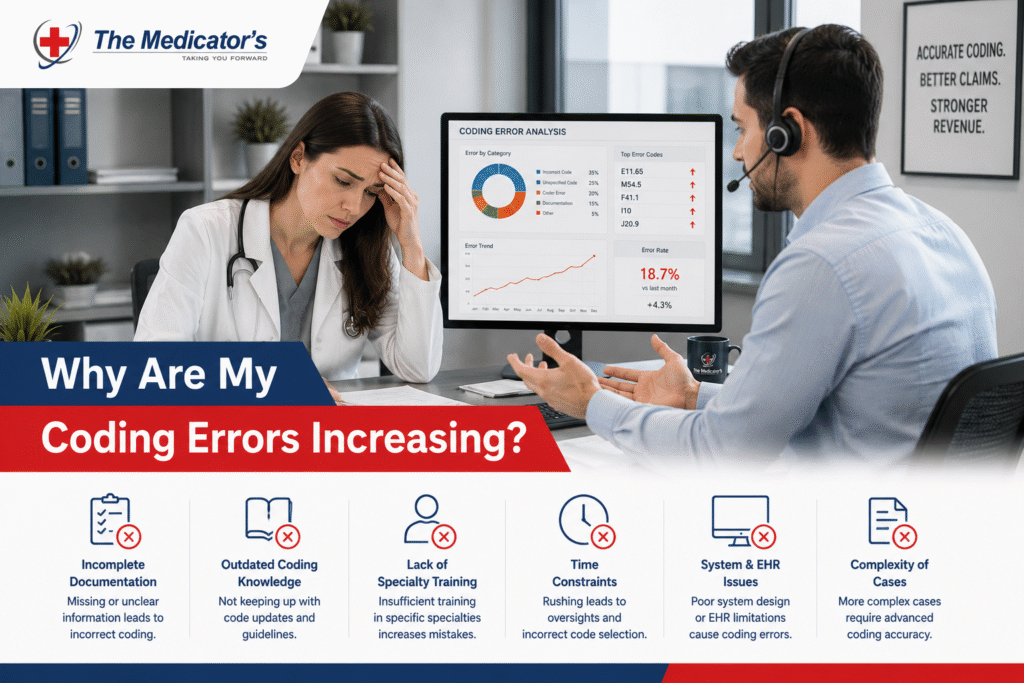
Increasing coding errors usually happen because of changes in documentation requirements, inconsistent coding practices, lack of ongoing training, and increased claim complexity. In healthcare, incorrect Medical Coding can lead to claim denials, delayed payments, compliance risks, and revenue loss. A strong coding review process helps identify mistakes before claims reach payers. Common Reasons Healthcare Coding […]
How Do I Know If My Billing Company Is Costing Me Money?

You can identify whether your billing company is costing your practice money by reviewing key revenue cycle metrics, including claim denial rates, days in accounts receivable, collection performance, and billing transparency. A reliable billing partner should help increase revenue, reduce errors, and provide clear reporting not create hidden revenue losses. Warning Signs Your Billing Company […]
Why Is Patient Financial Transparency Important in Modern Medical Billing?

Patient financial transparency is important because it helps patients understand healthcare costs before receiving services, reduces billing confusion, improves trust, and increases timely payments. Clear communication about insurance coverage, deductibles, estimated expenses, and payment responsibilities allows healthcare providers to create a better patient experience while improving revenue cycle performance. How Financial Transparency Improves the Revenue […]
How to Improve Revenue Cycle Management?

Healthcare providers can improve Revenue Cycle Management by optimizing every stage of the billing process, from patient registration and insurance verification to claim submission, denial management, and payment collection. A strong RCM strategy reduces revenue leakage, improves cash flow, lowers administrative workload, and ensures providers receive accurate reimbursement for services delivered. Practical Ways to Strengthen […]
How Mental Health Billing Differs From Medical Billing?
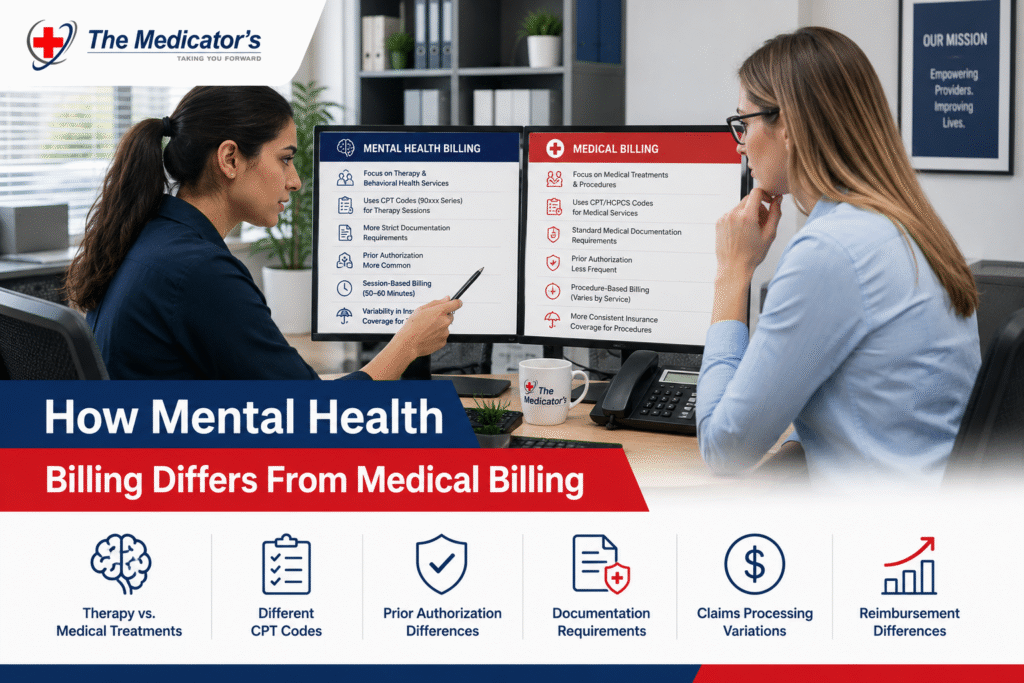
Mental health billing differs from general medical billing because it requires specialized coding rules, detailed documentation, session-based CPT codes, and frequent payer-specific requirements. Behavioral health providers must carefully manage treatment duration, service type, compliance requirements, and authorization rules to avoid claim denials and ensure accurate reimbursement. Key Differences Between Mental Health and Medical Billing Although […]
