
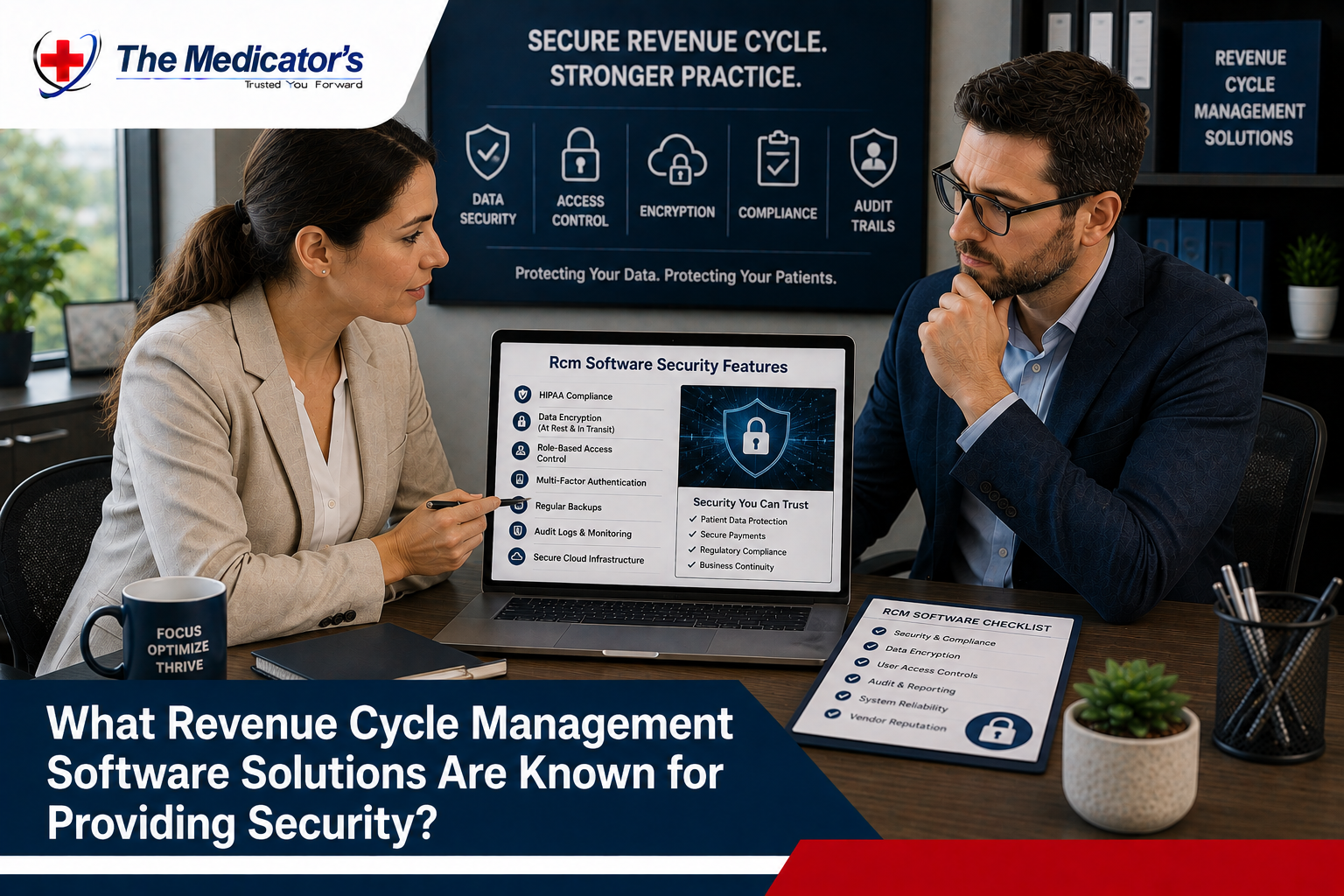
Revenue cycle management (RCM) software handles highly sensitive healthcare information, including patient demographics, insurance details, claims, payment information, and protected health information (PHI). For that reason, secure RCM software should provide strong HIPAA safeguards, encryption, access controls, audit logging, secure data transmission, and appropriate compliance certifications.
Several RCM platforms publicly document security measures such as SOC 2, HIPAA compliance, HITRUST, encryption, and role-based access controls. For example, ENTER states that its RCM platform is SOC 2 Type II certified and HIPAA compliant, while Open Practice reports SOC 2 Type II and HITRUST certification.
For medical practices that prefer to have revenue cycle operations managed by an experienced team rather than relying entirely on software, The Medicator’s medical billing services provide billing, coding, claims management, denial management, and A/R support.
Essential Security Features in RCM Software
When evaluating revenue cycle management software, practices should look beyond the word “secure” and verify the specific controls provided.
1. HIPAA Compliance
RCM systems handling PHI should be designed to support HIPAA requirements and appropriate administrative, physical, and technical safeguards. Practices should also determine whether the vendor will execute a Business Associate Agreement (BAA) when required.
2. Data Encryption
Sensitive information should be protected both while being transmitted and while stored. Secure RCM platforms may use encryption for data at rest and in transit. For example, ENTER states that its platform encrypts stored data and uses TLS 1.2+ for data in transit.
3. Role-Based Access Controls
Not every employee needs access to every patient or financial record. Role-based permissions can restrict users according to their responsibilities and reduce unnecessary exposure of sensitive information.
4. Audit Logs and Monitoring
Audit trails help organizations determine who accessed information, what actions were performed, and when those activities occurred. These controls can be particularly useful when investigating unauthorized access or unusual account activity.
Which RCM Software Solutions Emphasize Security?
Several healthcare RCM platforms publicly describe security and compliance measures. For example:
| RCM Solution | Security Features Publicly Reported |
|---|---|
| ENTER | HIPAA, SOC 2 Type II, encryption, role-based access, audit trails |
| Open Practice | HIPAA, SOC 2 Type II, HITRUST, secure AWS infrastructure |
| RCM Edge | HIPAA, SOC 2 Type II, ISO 27001, encryption |
| MediStreams | SOC 2 Type II controls covering security, availability, and processing integrity |
These claims should still be independently verified during vendor due diligence because certifications, security controls, and product capabilities can change over time. MediStreams, for example, announced its SOC 2 Type II examination in April 2026, covering its controls during 2025.
What Should a Medical Practice Ask Before Choosing RCM Software?
Before giving an RCM vendor access to patient and billing information, practices should ask:
- Is the platform HIPAA compliant?
- Will the vendor sign a BAA?
- Does the company maintain SOC 2 or HITRUST certification?
- Is PHI encrypted at rest and in transit?
- Does the system provide role-based access?
- Are user activities recorded through audit logs?
- How are backups protected?
- What happens if a security incident occurs?
- How is data handled when the contract ends?
- Can the vendor provide current security documentation?
These questions can help practices distinguish between a platform that simply advertises security and one that can demonstrate documented controls.
How The Medicator’s Helps Protect the Revenue Cycle
Security is important whether a practice manages billing internally, uses RCM software, or outsources its revenue cycle. The Medicator’s medical billing services support practices with billing, coding, claims processing, denial management, payment posting, and A/R follow-up.
If you want to determine whether your current revenue cycle has billing or operational weaknesses, you can request a free practice analysis from The Medicator’s. You can also reach the team through The Medicator’s contact page to discuss your practice’s billing and RCM requirements.
Choose RCM Software With Verifiable Security Controls
Secure RCM software should provide more than basic login protection. HIPAA safeguards, encryption, role-based access, audit trails, secure infrastructure, and independently verified compliance controls are important factors when evaluating a system that handles PHI and financial information.
Practices should compare vendors based on both security and revenue cycle functionality rather than choosing software solely because it offers automation or a low subscription cost. If you need help managing the revenue cycle beyond software, explore The Medicator’s medical billing services or request a free practice analysis to identify opportunities for improvement.
