
How Do I Prevent Same-Day Service Bundling in Urgent Care?
Preventing accidental same-day service bundling in urgent care requires appending precise CPT modifiers (such as Modifier 25 or Modifier 59), maintaining distinct clinical documentation for separate procedures, and utilizing automated pre-submission claim scrubbers aligned with National Correct Coding Initiative (NCCI) edits. In high-volume urgent care centers, payers often deploy automated filters that group minor procedures—such […]
How Can I Reduce A/R Days in an Urgent Care Center?
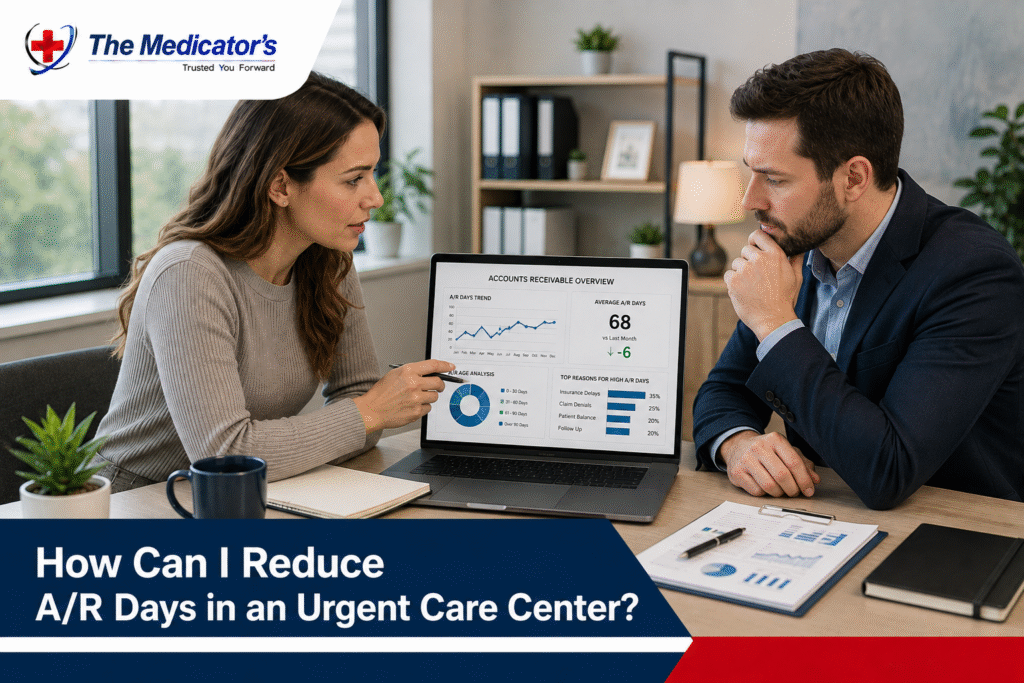
Reducing Accounts Receivable (A/R) days in an urgent care center requires enforcing real-time eligibility verification at patient intake, accelerating claim submission timelines to within 24–48 hours, and deploying automated patient collection workflows. Because urgent care clinics handle high patient turnover, walk-in visits, and rapid diagnostic testing, front-end registration typos and unposted charges can quickly push […]
Why Is My Urgent Care A/R Increasing?
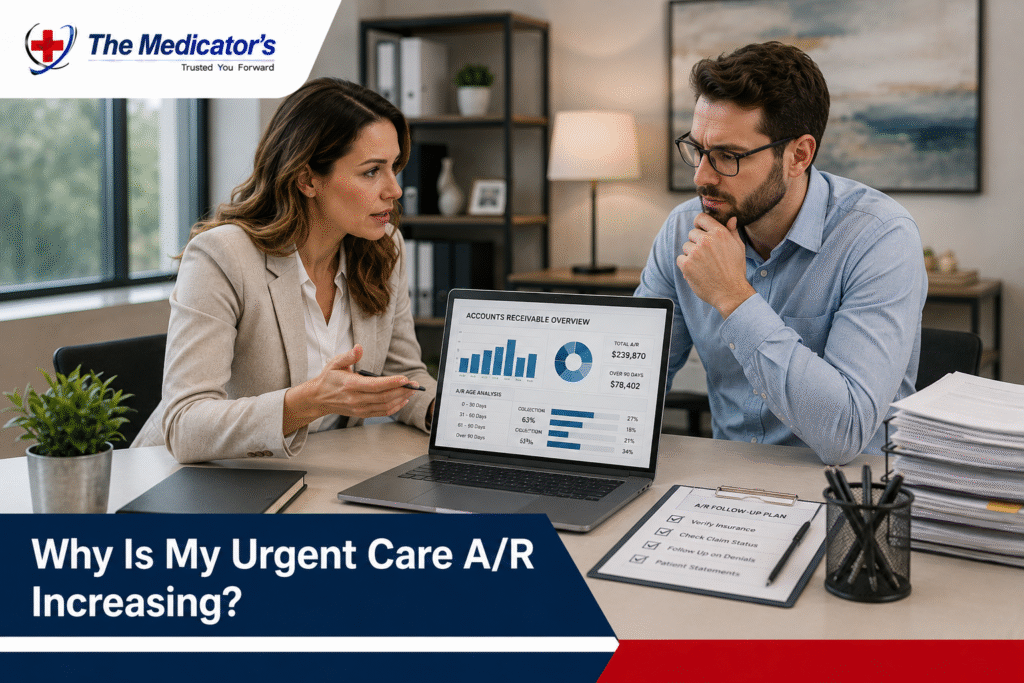
An increasing Accounts Receivable (A/R) balance in an urgent care center typically stems from front-desk intake errors, unworked clearinghouse claim denials, delayed provider chart closures, or ineffective patient collection workflows. When days in A/R cross the industry threshold of 30 to 40 days, it signals systemic bottlenecks in your revenue cycle that risk turning unpaid […]
How Much Revenue Can Be Lost From Undercoding Urgent Care Visits?
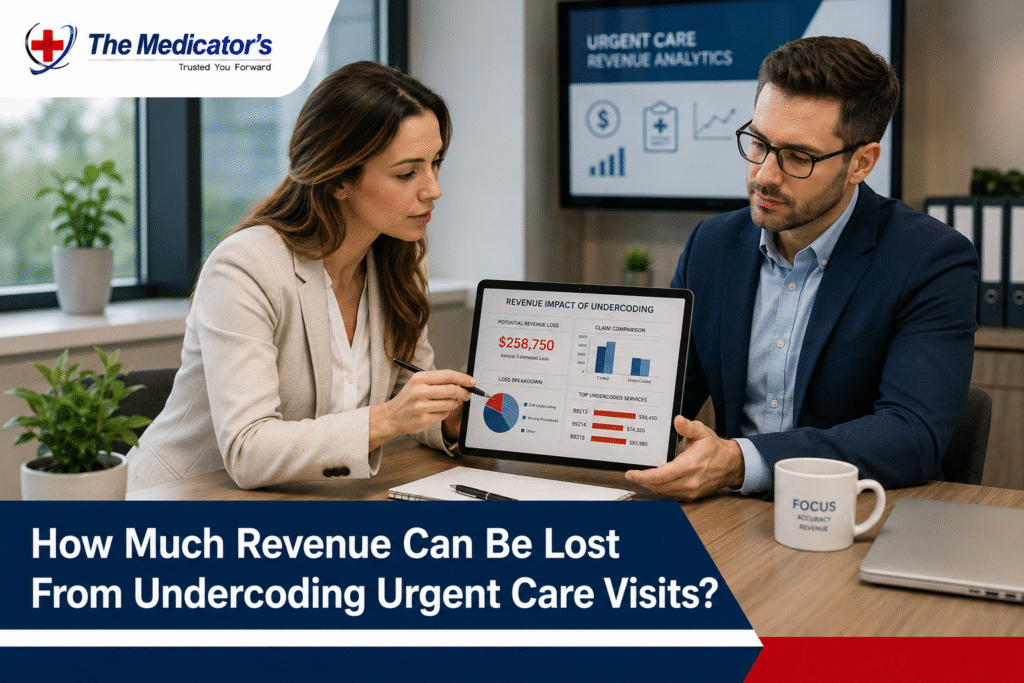
Undercoding urgent care visits can cost an individual healthcare provider between $35,000 and $70,000 per year, while causing a full-scale urgent care clinic to lose $150,000 to $300,000 or more in annual revenue. Undercoding occurs when clinicians or billers submit lower-level evaluation and management (E/M) codes, such as billing CPT 99213 instead of CPT 99214, […]
How Can I Find Unbilled Services in My Urgent Care Center?
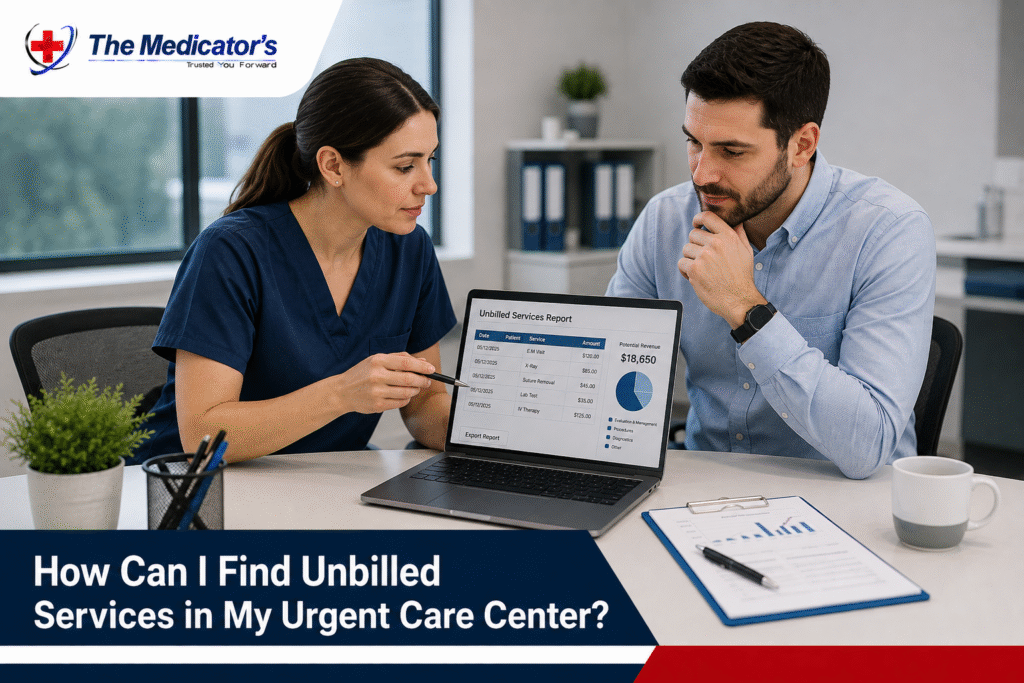
Finding unbilled services in an urgent care center requires running daily “Unbilled Claims” or “Unposted Charges” reports in your practice management system, auditing clinical logs against EHR schedules, and reconciling ancillary service tracking sheets. Because urgent care clinics handle high patient volumes, walk-ins, rapid diagnostic testing, and same-day procedures, unclosed charts and missing charge capture […]
How Do I Appeal a Denied Pediatric Claim?

Appealing a denied pediatric claim requires identifying the exact cause of the denial, reviewing the Explanation of Benefits (EOB), gathering clinical chart documentation, drafting a formal appeal letter, and submitting the package within strict payer filing deadlines. Because pediatric claims frequently deal with multi-component immunizations, age-bracketed checkups, and complex Medicaid MCO guidelines, structured appeal workflows […]
How Can I Identify Recurring Denial Patterns in My Pediatric Practice?

Identifying recurring denial patterns in a pediatric practice requires pulling monthly billing reports, grouping claim adjustments by standard codes, sorting denials by financial impact, and categorizing root causes across operational teams. Because pediatric revenue cycles deal with high claim volumes, age-bracketed preventive codes, combination immunizations, and newborn eligibility transitions, unnoticed billing errors can quickly cause […]
Which Pediatric Services Require Prior Authorization in Texas?
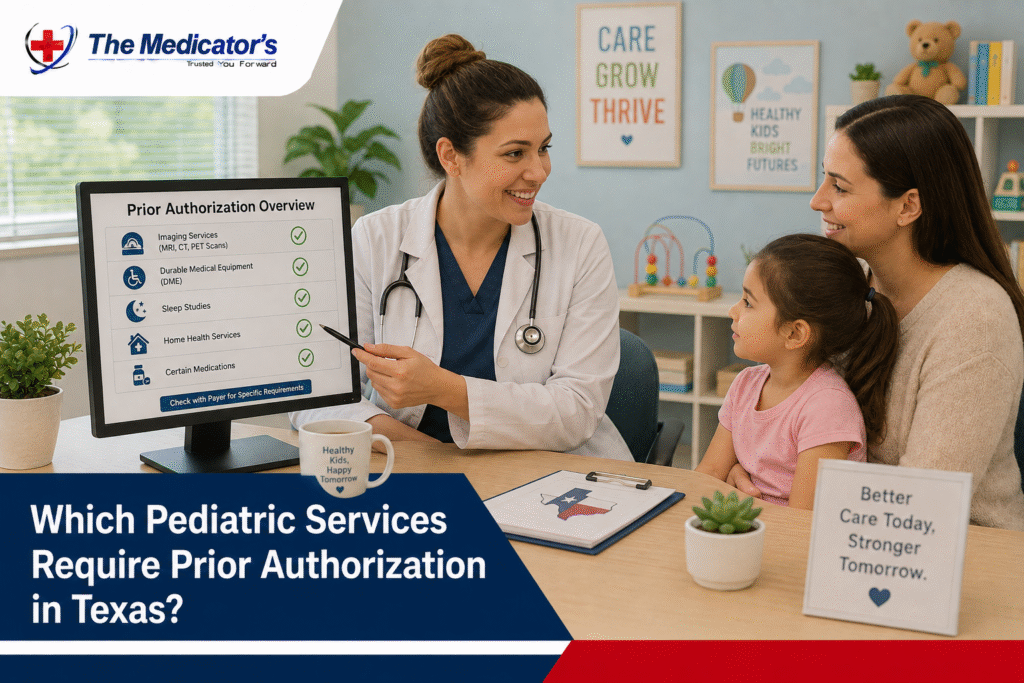
In Texas, prior authorization (PA) is required by Texas Medicaid (TMHP) and Managed Care Organizations (MCOs), such as Cook Children’s Health Plan, Texas Children’s Health Plan, and Superior HealthPlan, for specialized, high-cost, or ongoing pediatric services to verify medical necessity before care is rendered. Failing to obtain prior authorization or submitting incomplete clinical documentation results […]
How Can I Reduce Accounts Receivable in My Pediatric Practice?

Reducing accounts receivable (A/R) in a pediatric practice requires enforcing proactive front-desk collection policies, verifying insurance eligibility prior to every visit, submitting clean claims within 24 to 48 hours of service, and utilizing modern patient payment tools such as digital text-to-pay links and automated payment plans. Because pediatric practices deal with high patient visit volumes, […]
How Do I Prevent Pediatric Immunization Billing Errors?
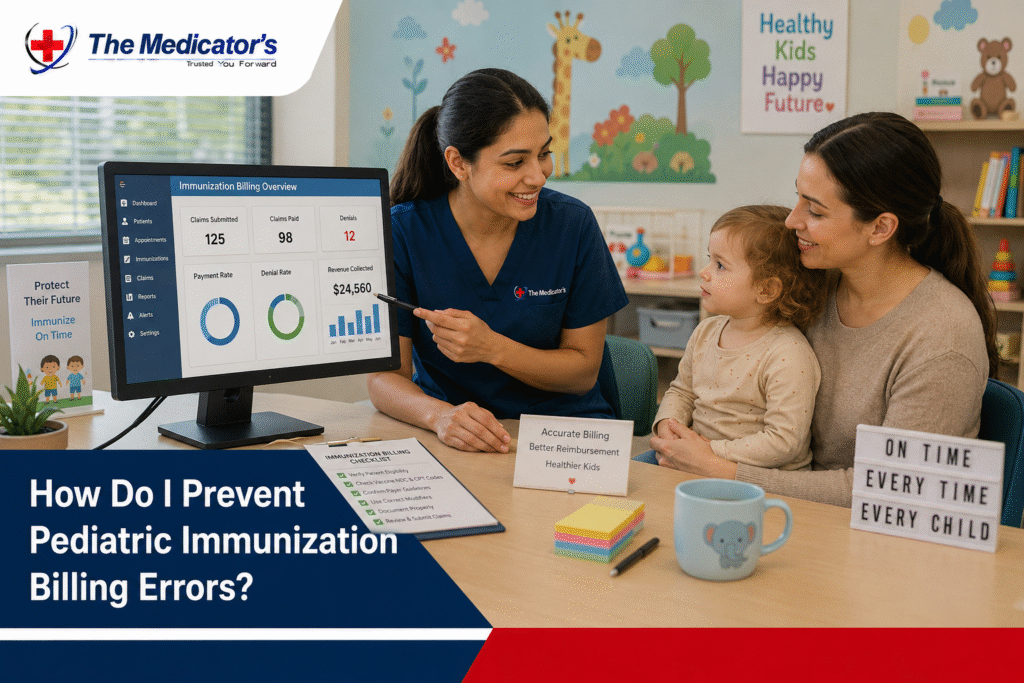
Preventing pediatric immunization billing errors requires submitting paired vaccine product and administration CPT codes, accurately documenting physician counseling, managing state-supplied inventory separate from private stock, and matching patient age parameters to strict payer guidelines. Aligning clinical chart documentation with automated clearinghouse rules prevents costly rejections, eliminates audit clawbacks, and protects practice cash flow. At The […]
