
How does automated claim scrubbing improve reimbursements?

Claim scrubbing in medical billing helps healthcare practices identify potential claim errors before submitting claims to insurance payers. By checking claim information for missing fields, coding inconsistencies, invalid code combinations, and other billing issues, automated claim scrubbing can reduce preventable submission errors and help practices manage their revenue cycle more efficiently. However, even a well-configured […]
What Type of Claim Was Never Entered Into the Insurance Company’s System?

A rejected claim is a healthcare claim that fails initial electronic or administrative checks before it enters the insurer’s adjudication process. It may be returned by a clearinghouse or payer front-end system because of missing information, invalid patient details, or formatting errors. Professional medical billing services help identify and correct these issues before resubmission. Rejected […]
Do Credentialing Companies Monitor Revalidation and Renewal Deadlines?
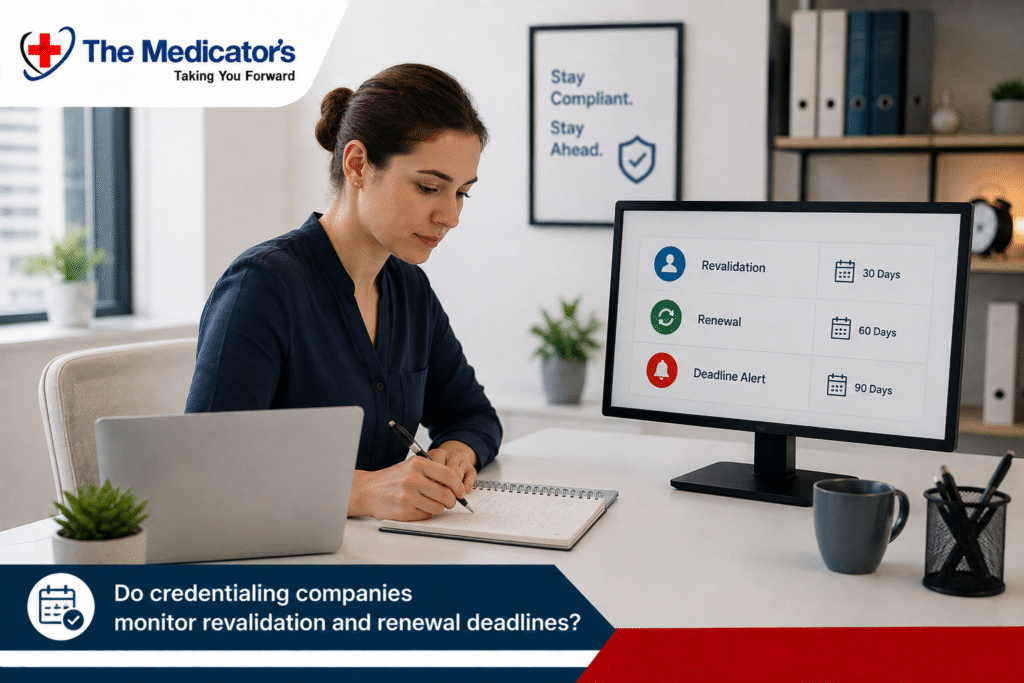
Yes. Many professional credentialing companies offer ongoing deadline monitoring for provider recredentialing, Medicare revalidation, CAQH ProView attestations, professional license renewals, and other expiring provider documents. The exact services depend on the vendor’s agreement with the medical practice. For healthcare organizations, credentialing deadline monitoring services can help centralize renewal dates, track pending payer requirements, organize provider […]
Why Are My ECG Claims Being Denied?

ECG claims are usually denied because the billing diagnosis code (ICD-10) does not satisfy payer medical necessity guidelines, the service was billed as routine screening without covered symptoms, or required administrative details such as Modifier 25 or ordering provider NPIs were omitted. Because electrocardiograms (CPT 93000 family) are frequently performed alongside evaluation and management (E/M) […]
Why Are My Cardiac Stress Test Claims Being Denied?

Cardiac stress test claims can be denied because of insufficient medical necessity documentation, inaccurate CPT or ICD-10-CM coding, missing authorization when required, incorrect component billing, or incomplete supporting records. For cardiology practices, these issues can delay reimbursement, increase accounts receivable (A/R), and create additional administrative work. If your practice is experiencing repeated cardiac stress test […]
Which Insurance Company Denies the Most Claims?

The answer depends on the type of health plan and the reporting period. In the latest 2024 HealthCare.gov claims data analyzed by KFF in March 2026, Oscar Health had the highest in-network denial rate among large insurer parent companies, at 25%. However, this does not mean Oscar denies the most claims across every insurance market […]
Why Are My Cardiology Claims Being Denied?

Cardiology claims may be denied because of incorrect CPT or ICD-10-CM coding, missing prior authorization, incomplete clinical documentation, modifier errors, medical necessity issues, eligibility problems, or payer-specific billing requirements. Even when a cardiovascular service is medically appropriate and performed correctly, a claim may not be reimbursed if the submitted information does not satisfy the payer’s […]
What Is the Role of Accounts Receivable Management in Healthcare?

Accounts receivable management in healthcare tracks and resolves unpaid insurance claims and patient balances after services are provided, helping medical practices convert completed patient care into collected revenue. Effective accounts receivable management services help providers monitor aging claims, investigate denials, follow up with insurance companies, and identify delayed or underpaid reimbursements. Practices experiencing growing A/R […]
What Should Providers Look for in a Multi-State Credentialing Partner?

Billing patients with multiple chronic conditions requires accurate chronic care management (CCM) documentation, appropriate CPT code selection, monthly time tracking, and compliance with applicable payer requirements. For eligible patients, Chronic Care Management services can support ongoing coordination between providers, medication management, care planning, and follow-up outside face-to-face visits. For medical practices, the challenge is not […]
How to bill psychiatric services?
Billing psychiatric services requires verifying patient benefits, selecting precise evaluation or psychotherapy CPT codes based on session time and medical services, pairing them with specific ICD-10 diagnosis codes, and submitting clean CMS-1500 claims. Navigating strict payer rules for time-based coding, add-on services, and interactive complexity is essential to avoid clearinghouse rejections and secure full reimbursement. […]
