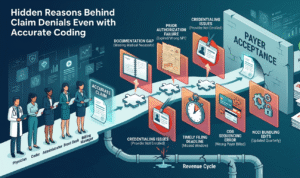
In the high-speed environment of an urgent care center, patient intake happens in a flash. However, even a tiny insurance verification mistake made during that rushed check-in can lead to a denied claim and a “zero-dollar” remittance weeks later.
Most urgent care centers don’t realize just how much revenue they are silently losing due to preventable front-desk errors. These mistakes lead to denied claims, delayed payments, and hours of administrative billing rework. In this guide, we break down the most common insurance verification issues in urgent care and how to fix them before they impact your bottom line.
Why Insurance Verification Is Critical in Urgent Care
The urgent care model presents unique challenges that traditional practices don’t face:
- The Walk-In Model: There is almost no time for pre-registration or background checks before the patient arrives.
- High Patient Volume: Front-desk staff are often overwhelmed, leading to rushed data entry.
- Complex Insurance Rules: Coverage for urgent care varies wildly between different payers and plan tiers.
In urgent care, speed often comes at the cost of accuracy and that’s where your revenue problems begin.
Top 7 Insurance Verification Issues in Urgent Care
1. Incomplete Patient Information
Rushed intake often leads to missing birth dates, misspelled names, or incorrect policy numbers.
- The Impact: Immediate claim rejection by the clearinghouse.
- The Fix: Implement a standardized intake checklist that must be completed before a patient is moved to the clinical area.
2. Skipping Real-Time Eligibility (RTE) Checks
Staff often assume that if a patient has a physical card, the coverage is active.
- The Impact: Working on non-payable claims for expired policies.
- The Fix: Use automated real-time verification tools to check active status for every single visit.
3. Not Checking Service-Specific Urgent Care Coverage
A patient may have “Active” insurance, but their specific plan may not cover urgent care or may require a much higher deductible.
- The Impact: Partial payments or total denials.
- The Fix: Train staff to verify service-specific benefits, not just “active/inactive” status.
4. Ignoring Copays & Deductibles
When financial responsibility isn’t clear at check-in, the clinic loses the chance to collect.
- The Impact: Increased bad debt and high collection costs later.
- The Fix: Verify the exact copay amount upfront and collect it before the patient leaves.
5. Outdated Insurance Information
Patients often present old cards or have policy changes they haven’t mentioned.
- The Impact: Claim rejections for “Member Not Found.”
- The Fix: Treat every patient like a “New Patient” regarding their insurance card at every visit.
6. Missing Authorization Requirements
Some higher-tier urgent care services or specific diagnostic tests require prior approval from the payer.
- The Impact: Automatic, non-appealable denials.
- The Fix: Integrate an authorization workflow into your front-desk software.
7. Telehealth Coverage Confusion
Virtual urgent care is growing, but not every payer covers it the same way as an in-person visit.
- The Impact: Denied virtual claims.
- The Fix: Specifically verify telehealth eligibility before starting a virtual encounter.
The Hidden Cost: It’s Not Just a Paperwork Error
Most urgent care centers don’t lose money during treatment they lose it at the front desk. These verification issues lead to increased denial rates, revenue leakage, and massive staff rework. It also causes patient dissatisfaction when they receive unexpected bills weeks later.
How to Fix Insurance Verification Issues (Action Plan)
- Standardize Front Desk Workflow: Every patient follows the same verification path.
- Implement Real-Time Tools: Stop relying on manual phone calls or outdated portals.
- Intensive Staff Training: Educate your intake team on the financial impact of their role.
- Use Verification Checklists: Ensure no field is left blank.
- Integrate Systems: Your verification tools and billing software should speak to each other.
In-House vs. Outsourced Verification
| In-House Verification | Outsourced RCM (The Medicators) |
| Often error-prone due to volume | Accuracy-driven by specialized experts |
| Manual, inconsistent processes | High-speed automated workflows |
| Staff burden & burnout | Expert handling 24/7 |
Optimize Your Front Desk with The Medicators
Insurance verification may seem like a simple step, but in urgent care, it is the foundation of your entire revenue cycle. At The Medicators, we integrate verification with billing to ensure your claims are “clean” before they ever leave your office.
- Real-Time Insurance Verification
- Authorization Management
- Proactive Denial Prevention
- Full Revenue Optimization
Identify Your Verification Gaps
Tired of claim denials due to verification errors? Get a FREE Billing Audit Today.
Let us help you stop the revenue leaks at your front desk.
FAQ Section
What is insurance verification in urgent care?
It is the process of confirming a patient’s insurance coverage, active status, and specific benefits before the service is provided.
Why is eligibility verification important?
It ensures that the provider will be paid for the service and informs the patient of their financial responsibility upfront.
How often should insurance be verified?
In an urgent care setting, insurance should be verified at every single visit to account for policy changes or lapses.