
Why Are My Epidural Steroid Injection Claims Being Denied?
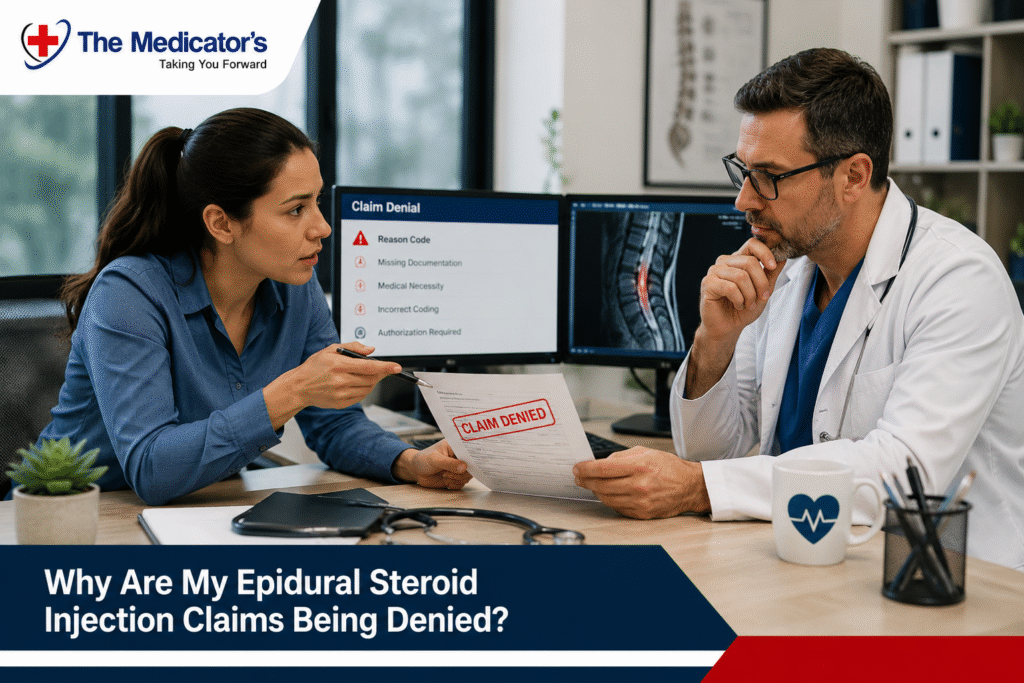
Epidural steroid injection (ESI) claims are denied primarily because insurance payers determine the procedure lacks medical necessity documentation, exceeds strict policy frequency limits, lacks matching MRI/CT imaging, or contains improper coding. Because interventional pain management undergoes rigorous utilization review by commercial payers and Medicare, missing a single clinical requirement will result in claim rejections or […]
What Documentation Is Required for a Medicare Annual Wellness Visit?

Complete clinical documentation for a Medicare Annual Wellness Visit (AWV) requires recording specific mandatory components mandated by the Centers for Medicare & Medicaid Services (CMS). Unlike a routine physical examination, an AWV focuses on cognitive assessment, risk identification, and preventive planning rather than a hands-on physical exam. Failing to document any single required CMS component […]
How Do I Prevent Missed Revenue From Preventive Services?

Preventing missed revenue from preventive services requires bridging operational gaps across front-desk verification, EHR clinical charting, and claims scrubbing. Primary care and specialty practices routinely lose revenue due to unverified payer frequency limits, unbilled preventive add-on services, unapplied Modifier 25 edits, and failing to analyze systemic denial patterns. At The Medicator’s, our certified coding and […]
Why Was My Annual Wellness Visit Bundled With an Office Visit?
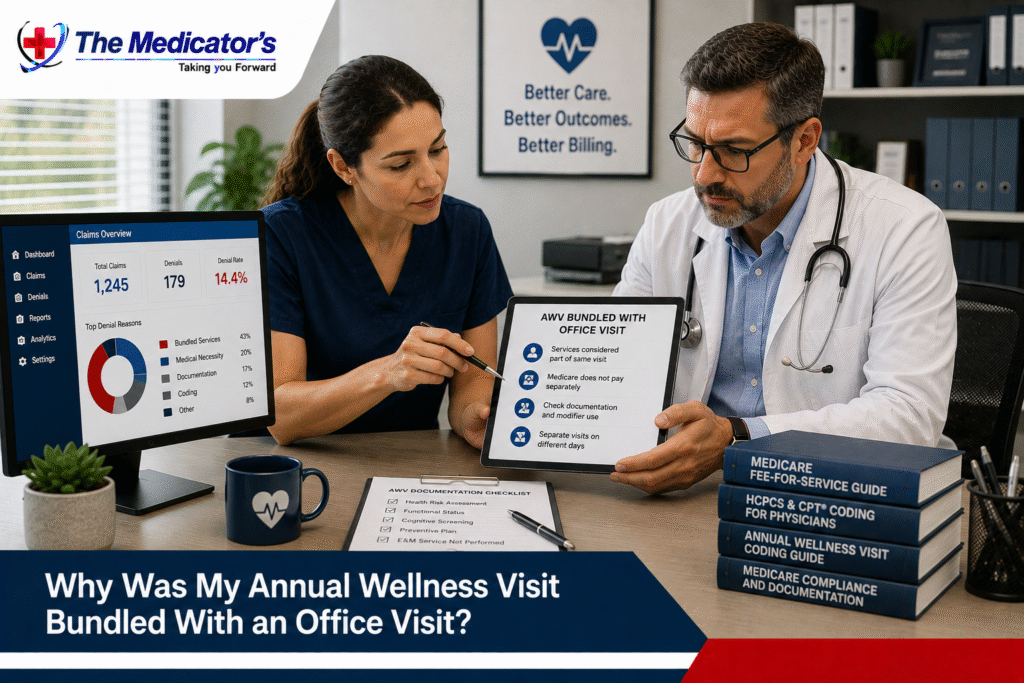
An Annual Wellness Visit (AWV) is bundled or billed alongside a regular Evaluation and Management (E/M) office visit when a patient discusses, manages, or receives treatment for a specific health concern, new symptom, or active chronic condition during the same encounter. Because Medicare covers wellness visits strictly for preventive health planning, addressing active medical issues […]
What Is the Difference Between an Annual Wellness Visit and a Routine Physical?

The primary difference between a Medicare Annual Wellness Visit (AWV) and a routine physical exam lies in their clinical purpose, physical exam components, and insurance coverage. An Annual Wellness Visit is a Medicare Part B covered preventive planning session focused on health risk assessments, cognitive screenings, and personalized disease prevention. In contrast, a routine physical […]
How Do I Bill Medicare Annual Wellness Visits Correctly?

Billing a Medicare Annual Wellness Visit (AWV) correctly requires selecting the exact HCPCS code based on patient history, confirming that 11 full calendar months have passed since the previous wellness encounter, documenting all mandatory CMS elements, and attaching Modifier 25 to any separate problem-oriented Evaluation and Management (E/M) service performed on the same day. At […]
Why Is My Internal Medicine Practice Losing Revenue From Complex Patient Visits?

Internal medicine practices frequently lose revenue on complex patient visits because traditional billing workflows fail to capture the high cognitive workload, extensive care coordination, and cumulative physician time required for multi-system disease management. Common operational leakage points include systematic undercoding due to audit fear, poor EHR charting of Medical Decision Making (MDM), failure to report […]
Why Are My Medicare Internal Medicine Claims Being Denied?
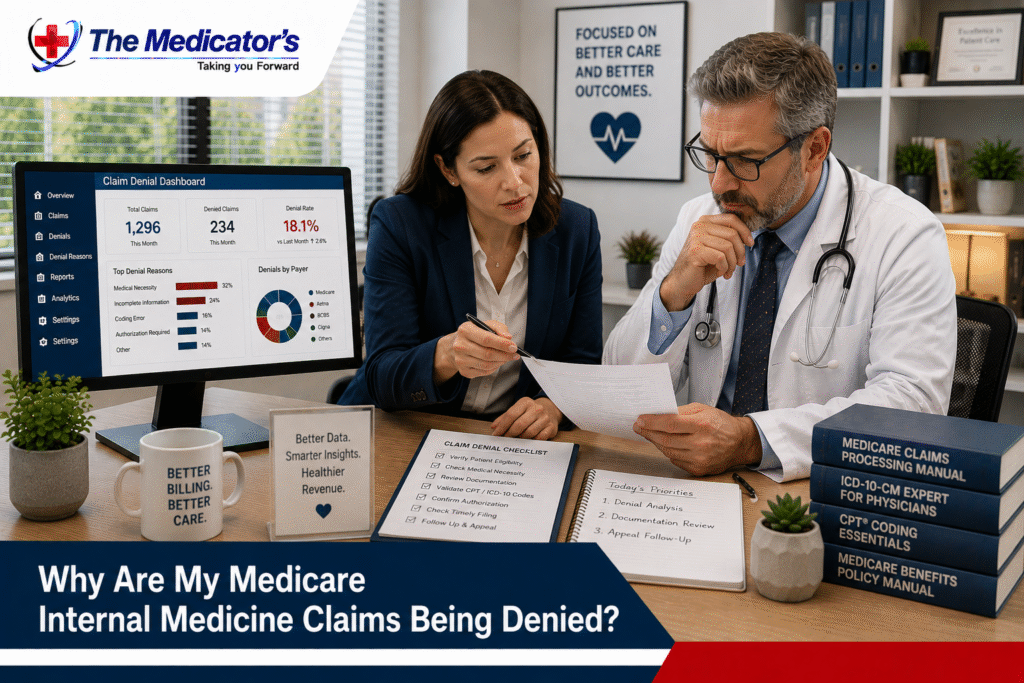
Medicare internal medicine claims usually face denial due to Evaluation and Management (E/M) coding mismatches, missing clinical documentation to prove medical necessity, unbundling or modifier errors, and prior authorization lapses under Medicare Advantage plans. Because Medicare and Medicare Administrative Contractors (MACs) enforce strict automated clearinghouse edits, small documentation gaps or timing errors can result in […]
Why Are Diagnoses Documented in the Chart but Missing From Claims?

Diagnoses often appear in the medical chart but fail to make it onto insurance claims due to a disconnect between clinical documentation habits, Electronic Health Record (EHR) workflows, and medical coding processes. Common triggers include delayed provider chart sign-offs, failure to meet MEAT (Monitoring, Evaluation, Assessment, Treatment) documentation standards, unbilled secondary conditions, and clearinghouse or […]
How Can Internal Medicine Providers Improve HCC Documentation?
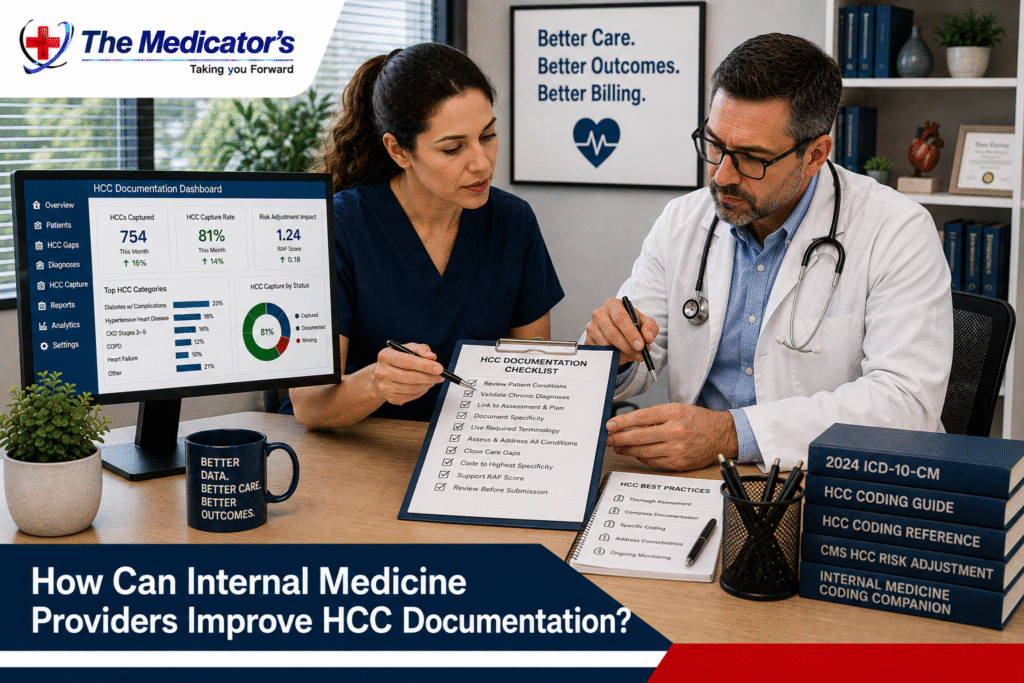
Internal medicine providers can improve Hierarchical Condition Category (HCC) documentation by strictly applying the MEAT criteria (Monitoring, Evaluating, Assessing, Treating) during every patient encounter, capturing all active chronic conditions annually, utilizing high-specificity ICD-10 codes, and optimizing Electronic Health Record (EHR) decision support tools. Accurate risk-adjustment documentation ensures that Medicare Advantage and value-based care reimbursement accurately […]
