
Why Was My E/M Code Denied When Billed With Psychotherapy?
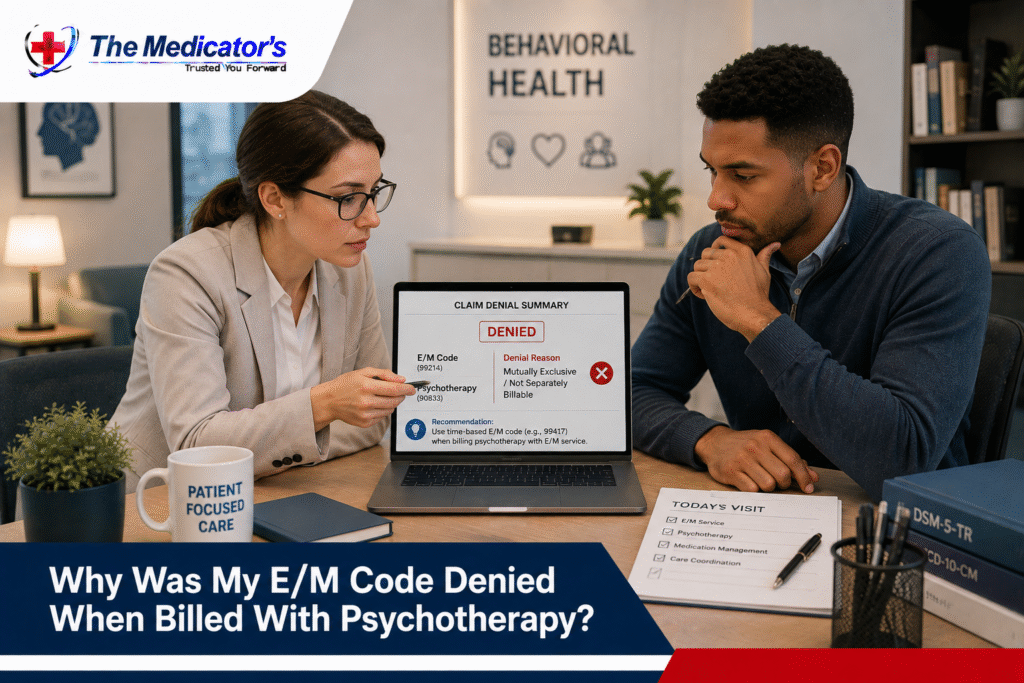
An Evaluation and Management (E/M) code billed on the same day as psychotherapy is typically denied due to a missing Modifier 25, improper selection of standalone psychotherapy codes instead of add-on codes (+90833, +90836, +90838), overlapping time documentation in clinical notes, or a failure to establish separate medical necessity for both services. Insurers utilize automated […]
How Do I Bill Psychotherapy and Medication Management on the Same Day?
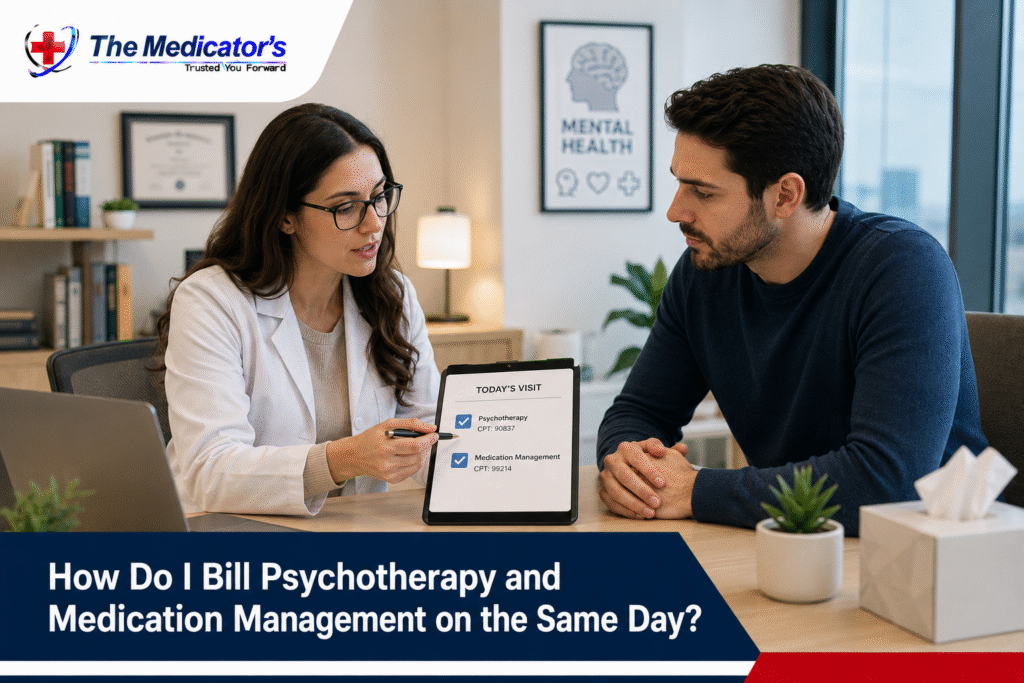
To bill psychotherapy and medication management on the same day when performed by the same qualified healthcare professional (such as a psychiatrist or psychiatric nurse practitioner), you must report a primary Evaluation and Management (E/M) code (CPT 99202–99215) for the medical evaluation/medication management, paired with a psychotherapy add-on CPT code (+90833, +90836, or +90838) for […]
Why Are My Urgent Care E/M Codes Being Downcoded?
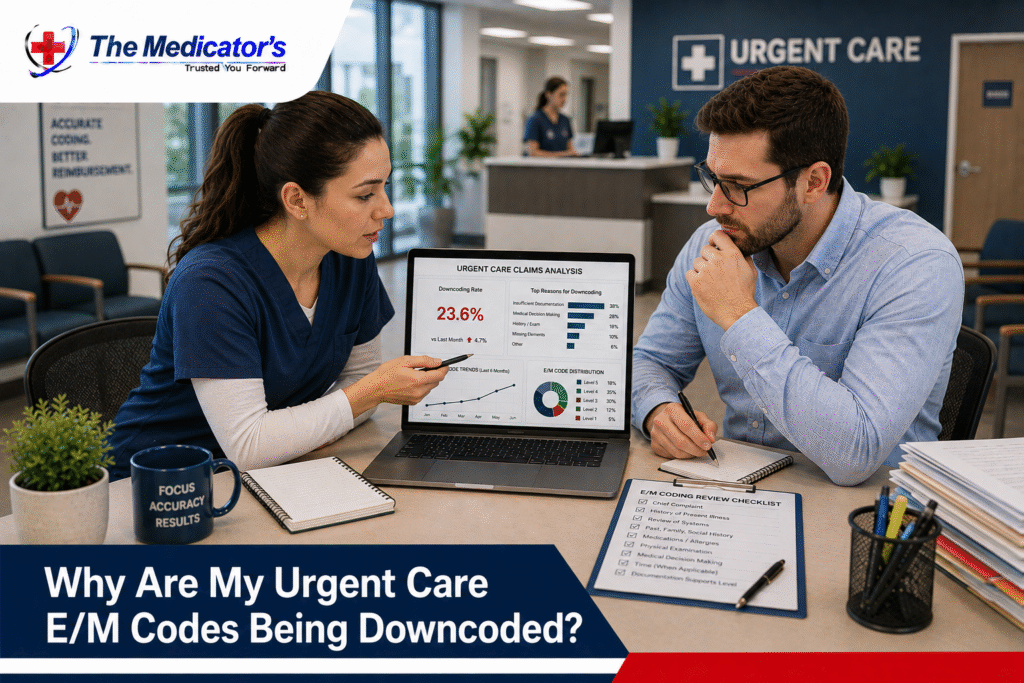
Urgent care Evaluation and Management (E/M) codes are frequently downcoded due to aggressive payer software algorithms, incomplete documentation of Medical Decision Making (MDM) complexity, or unbundled modifier issues when procedures (such as X-rays, splints, or rapid lab testing) are performed during the same visit. Because payers closely monitor high-level walk-in encounter billing (such as CPT […]
How Does E/M Leveling Affect Urgent Care Revenue?
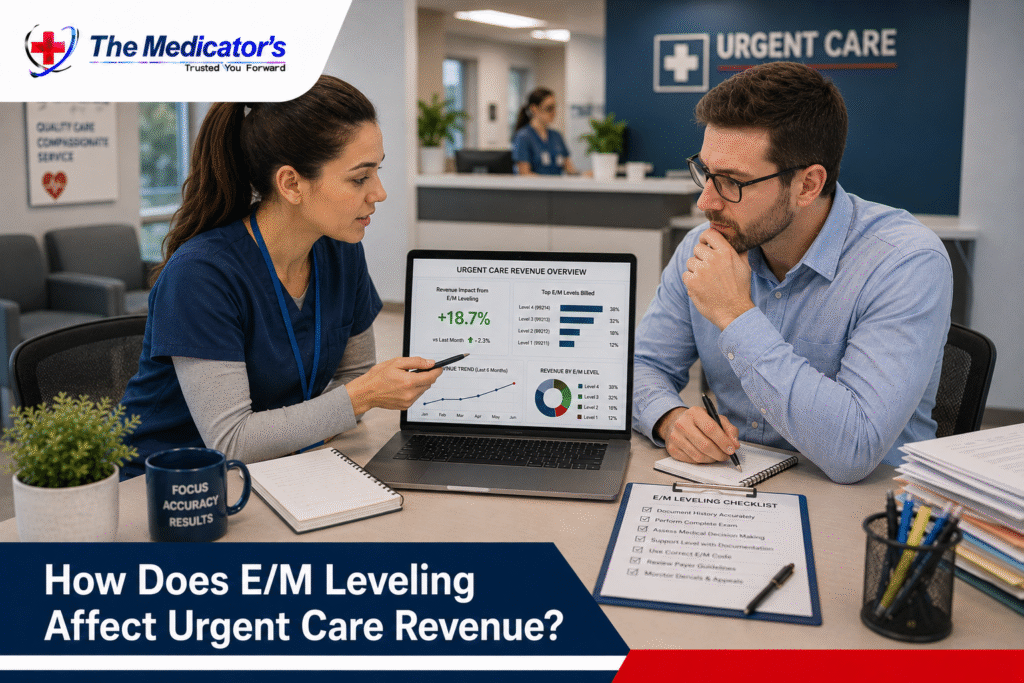
Evaluation and Management (E/M) leveling directly drives urgent care revenue by determining exact reimbursement rates based on Medical Decision Making (MDM) complexity or total provider time on the date of service. Undercoding high-complexity encounters (e.g., billing CPT 99203/99213 instead of 99204/99214 or 99205/99215) causes severe annual revenue leakage per provider. Conversely, inaccurate upcoding or weak […]
How Do Texas Medicaid MCOs Affect Urgent Care Claims?
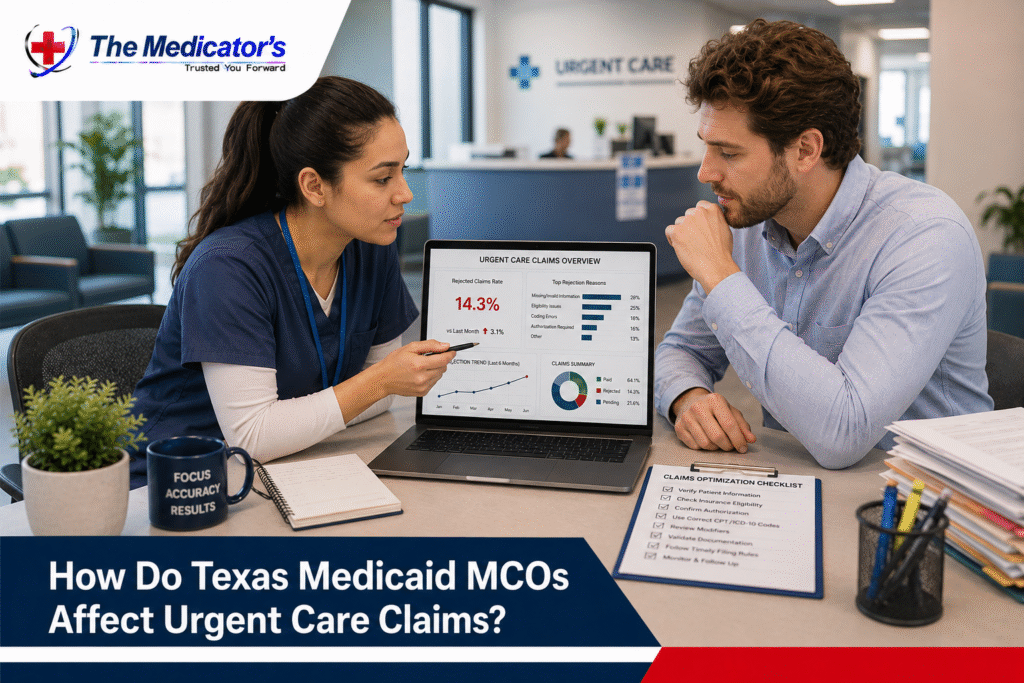
Texas Medicaid Managed Care Organizations (MCOs) such as Superior HealthPlan, Parkland Community Health Plan, Molina Healthcare, Texas Children’s Health Plan, and Wellpoint affect urgent care claims by replacing standardized state fee-for-service guidelines with plan-specific provider network contracts, varying reimbursement fee schedules, individual prior authorization rules for secondary testing, and strict 95-day timely filing limits. While […]
How Do I Reduce Rejected Claims in a High-Volume Urgent Care Practice?
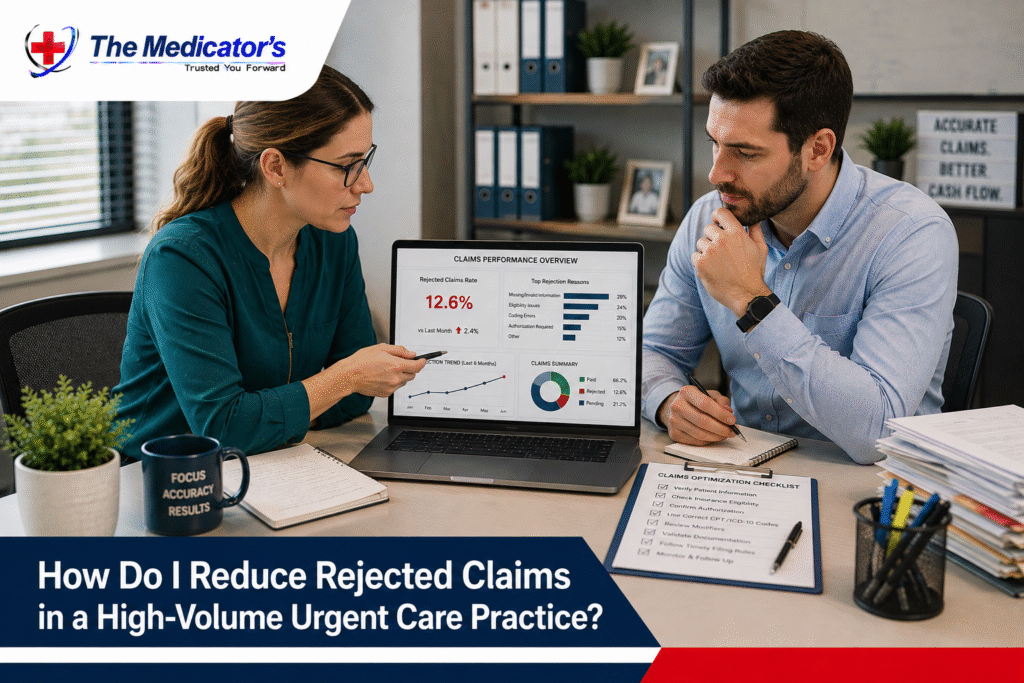
To reduce rejected claims in a high-volume urgent care practice, you must implement automated front-desk real-time eligibility (RTE) checks, standardize clinical documentation prompts within your EHR, utilize automated clearinghouse claim scrubbing rules, and actively monitor daily rejection trends. Addressing front-end registration typos, place-of-service mismatches, and coding errors before claim transmission prevents clearinghouse rejections and protects […]
Why Are My Urgent Care Injection Claims Being Denied?
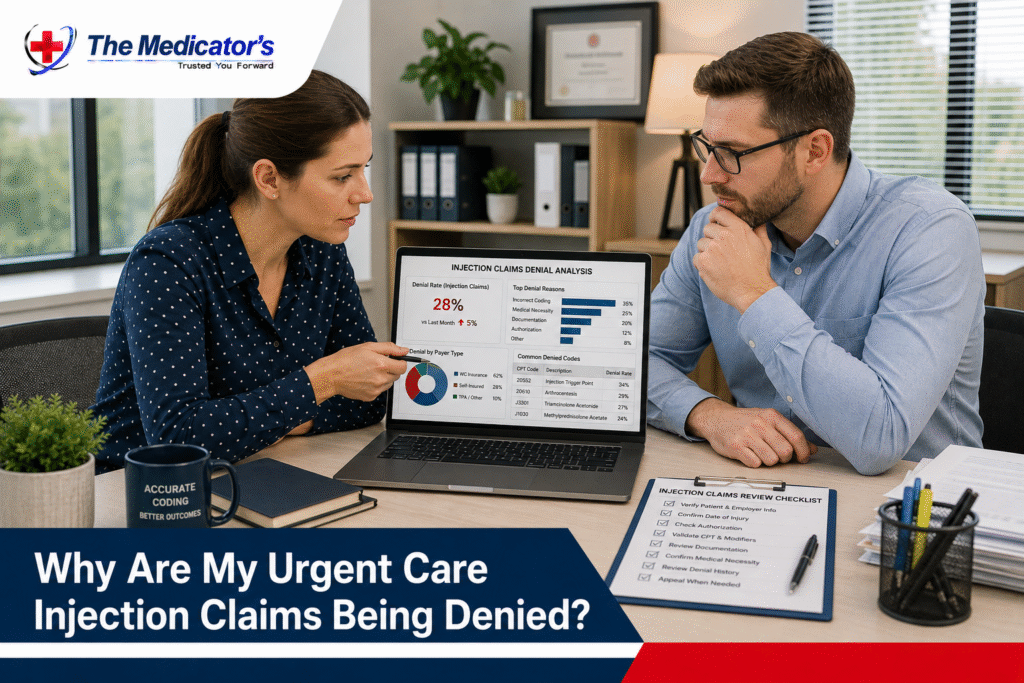
Urgent care injection claims are commonly denied due to missing CPT modifiers (such as Modifier 25 appended to the E/M code), unbundled administration codes, mismatched HCPCS J-codes, lack of documented medical necessity, or missing prior authorization for specialized therapeutic substances. Because insurance payers closely monitor same-day evaluation visits and injection administration, even minor coding mismatch […]
How Do I Bill Workers’ Compensation Claims From Urgent Care?
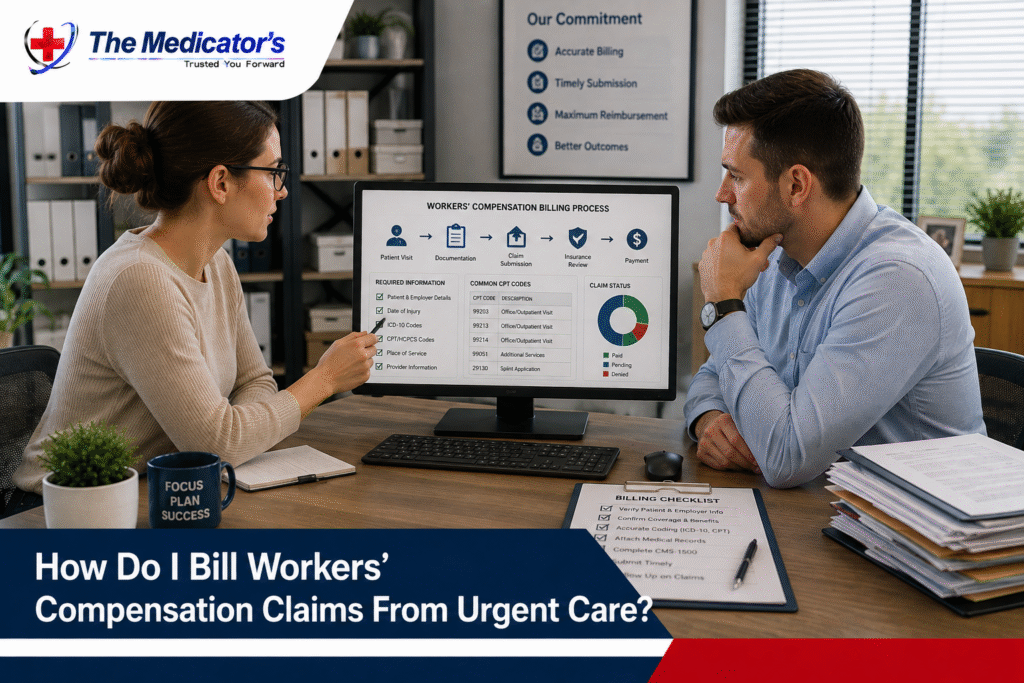
To bill a workers’ compensation claim from an urgent care clinic, you must complete the standard CMS-1500 (HCFA) claim form, ensuring the exact date of injury, employer details, external cause-of-injury ICD-10 codes, and carrier claim number are accurately populated. Along with the claim form, you must attach comprehensive clinical documentation—including the initial provider evaluation, work-status/restriction […]
Why Are My Workers’ Compensation Urgent Care Claims Being Denied?
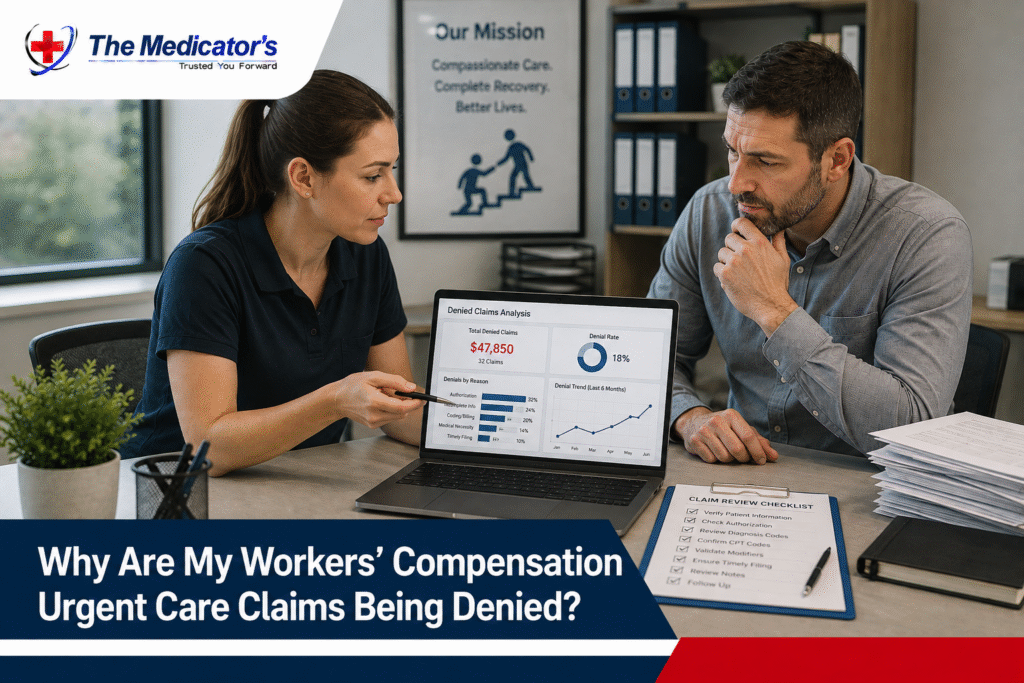
Workers’ compensation urgent care claims are frequently denied due to delayed employer injury reporting, missing causal documentation linking the injury to a specific workplace incident, non-authorized provider usage, missing work-status forms, or billing errors such as missing state fee schedule modifiers and incorrect ICD-10 injury codes. Because workers’ compensation claims operate under separate state regulations, […]
Why Was My Urgent Care Claim Denied Because It Didn’t Qualify as Urgent Care?
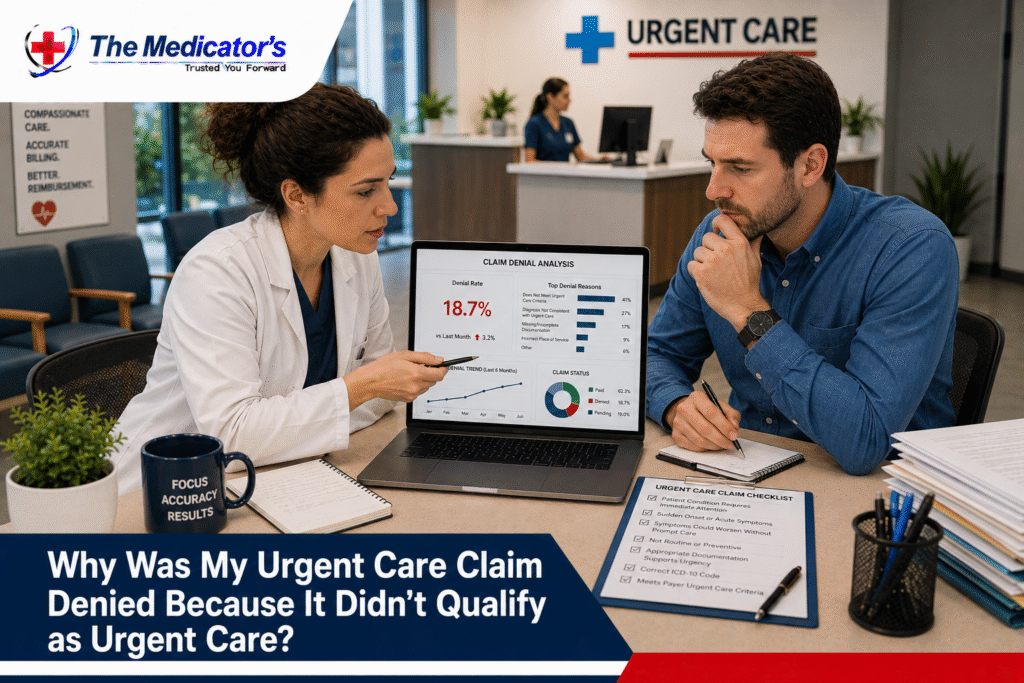
Urgent care claims are frequently denied for failing to qualify as “urgent care” due to technical billing mismatches, such as incorrect Place of Service (POS) codes, billing non-urgent diagnosis codes, using standard Medicare codes instead of commercial S-codes, or omitting procedure modifiers. These denials rarely reflect a lack of medical necessity; rather, they indicate that […]
