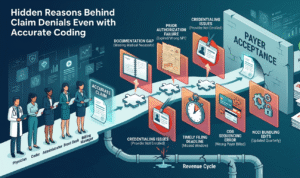
Many internal medicine practices focus on increasing patient volume when the real problem is hidden revenue leakage. The reality is simple: if your billing process isn’t optimized, your practice could be losing thousands of dollars every month without realizing it.
From coding mistakes to unpaid claims, small inefficiencies often create major financial consequences over time.
Let’s look at the seven most common revenue leaks in internal medicine billing and what your practice can do to prevent them.
Why Revenue Leakage Is a Growing Problem for Internal Medicine Practices
Internal medicine providers face unique reimbursement challenges.
Unlike many specialties, internal medicine practices often manage:
- High patient volumes
- Chronic care management
- Preventive visits
- Multiple payer contracts
- Complex Evaluation and Management (E/M) coding
These factors create numerous opportunities for billing mistakes that reduce revenue.
In our experience working with healthcare providers, even well-established practices often discover significant revenue leakage after a comprehensive billing audit.
What Revenue Leakage Really Means
Revenue leakage occurs when a practice earns reimbursement opportunities but fails to collect the full amount owed.
This can happen through:
| Revenue Leak | Financial Impact |
| Denied Claims | Lost or delayed payments |
| Coding Errors | Underpayments |
| Missed Charges | Unbilled services |
| Aging AR | Reduced collections |
| Eligibility Issues | Claim rejections |
| Billing Delays | Cash flow disruptions |
The challenge is that many leaks remain hidden until revenue performance begins to decline.
Revenue Leak #1: Insurance Eligibility Errors
One of the most preventable causes of lost revenue is inaccurate insurance verification.
Common issues include:
- Expired coverage
- Incorrect policy numbers
- Outdated insurance information
- Changes in patient plans
When eligibility is not verified before the visit, claims may be rejected before processing even begins.
How to Prevent It
- Verify eligibility before every appointment
- Automate verification workflows
- Train front-desk staff regularly
Key Takeaway: Eligibility errors create avoidable claim rejections and unnecessary delays.
Revenue Leak #2: Coding Inaccuracies
Coding errors remain one of the biggest threats to reimbursement.
Internal medicine providers frequently bill:
- Preventive visits
- Chronic care management
- Transitional care management
- E/M services
Even small coding mistakes can trigger denials or underpayments.
Common Coding Problems
- Incorrect CPT selection
- Wrong ICD-10 codes
- Missing modifiers
- Unsupported documentation
How to Prevent It
- Conduct routine coding audits
- Provide coder education
- Review payer policy updates
Key Takeaway: Accurate coding directly impacts collections and compliance.
Revenue Leak #3: Missed Charges and Underbilling
Many practices unintentionally fail to bill for services that were performed.
Examples include:
- Chronic care management
- Annual wellness visits
- Preventive screenings
- Care coordination services
Missed charges reduce revenue immediately.
How to Prevent It
- Implement charge capture reviews
- Reconcile documentation against claims
- Monitor provider productivity reports
Key Takeaway: Every missed charge represents revenue that cannot be recovered later.
Revenue Leak #4: Claim Denials and Rejections
Claim denials remain one of the largest revenue drains in healthcare.
Common denial reasons include:
- Coding errors
- Authorization issues
- Eligibility problems
- Documentation deficiencies
Denied claims often require extensive staff time for corrections and appeals.
How to Prevent It
- Monitor denial trends
- Establish denial management workflows
- Submit clean claims the first time
Key Takeaway: Lower denial rates lead directly to improved cash flow.
Revenue Leak #5: Delayed Claim Submission
Many payers enforce strict filing deadlines.
When claims are submitted late, practices risk losing reimbursement entirely.
Delays often result from:
- Staffing shortages
- Workflow bottlenecks
- Manual billing processes
How to Prevent It
- Submit claims daily
- Automate claim workflows
- Monitor claim aging reports
Key Takeaway: Faster claim submission accelerates reimbursement cycles.
Revenue Leak #6: Poor Accounts Receivable Follow-Up
Unresolved AR balances represent revenue sitting on the table.
Without consistent follow-up:
- Claims remain unpaid
- Appeals expire
- Collection rates decline
Signs of AR Problems
- Increasing Days in AR
- High aging balances
- Rising write-offs
How to Prevent It
- Establish AR follow-up schedules
- Prioritize high-value claims
- Monitor aging reports weekly
Key Takeaway: Aggressive AR management improves overall collections.
Revenue Leak #7: Inefficient Revenue Cycle Processes
Many practices struggle with fragmented billing workflows.
Common issues include:
- Manual data entry
- Lack of reporting
- Poor communication between departments
- Inconsistent billing procedures
Over time, inefficiencies compound and affect profitability.
How to Prevent It
- Standardize workflows
- Automate repetitive tasks
- Track key performance indicators
Key Takeaway: A strong revenue cycle process reduces leakage across every stage of billing.
How to Identify Revenue Leaks in Your Practice
If you’re unsure whether revenue leakage exists, monitor these key metrics:
| KPI | Target |
| First-Pass Claim Rate | Above 95% |
| Net Collection Rate | Above 95% |
| Days in AR | Below 40 Days |
| Denial Rate | Below 5% |
| Clean Claim Rate | Above 90% |
Consistent monitoring helps identify financial weaknesses before they become larger problems.
Why Internal Medicine Practices Outsource Billing
Many practices find that outsourcing billing produces better financial outcomes than managing billing internally.
Benefits include:
- Reduced denials
- Faster reimbursements
- Better coding accuracy
- Lower administrative burden
- Improved compliance
Professional billing teams often uncover revenue opportunities that internal staff may overlook.
Is Revenue Leakage Affecting Your Practice?
The Medicators specializes in identifying billing inefficiencies, reducing claim denials, and improving reimbursement performance for internal medicine practices throughout New York.
How The Medicators Helps Internal Medicine Practices Recover Revenue
Our team provides:
- Insurance verification
- Medical coding
- Claim submission
- Denial management
- AR recovery
- Revenue cycle optimization
- Credentialing support
By addressing hidden revenue leaks, we help practices improve collections and strengthen financial performance.
Frequently Asked Questions
What is revenue leakage in medical billing?
Revenue leakage occurs when healthcare practices fail to collect the full reimbursement they are entitled to receive. Common causes include coding errors, denied claims, missed charges, delayed submissions, and poor accounts receivable management.
Why do internal medicine practices experience revenue leakage?
Internal medicine practices often manage high patient volumes, multiple payer contracts, and complex coding requirements. These factors increase the risk of billing mistakes that can negatively impact revenue.
How can claim denials affect practice profitability?
Denied claims delay reimbursement, increase administrative costs, and may result in lost revenue if not appealed successfully. High denial rates often indicate deeper issues within the revenue cycle.
What are the most common coding errors in internal medicine billing?
Common coding mistakes include incorrect E/M level selection, missing modifiers, diagnosis-code mismatches, and inadequate documentation supporting billed services.
How often should practices audit their billing processes?
Most experts recommend conducting billing and coding audits at least quarterly. Regular audits help identify revenue leaks, compliance risks, and reimbursement opportunities.
Can outsourcing billing increase collections?
Yes. Specialized billing companies often improve claim accuracy, reduce denials, strengthen AR follow-up, and optimize revenue cycle performance, resulting in higher collections.
What KPI is most important for identifying revenue leaks?
While multiple metrics matter, denial rate, net collection rate, and Days in Accounts Receivable are among the most effective indicators of revenue leakage.
How can The Medicators help internal medicine practices?
The Medicators provides specialized Internal Medicine Billing Services in New York, including coding, claim submission, denial management, AR recovery, and revenue cycle optimization to maximize reimbursements.
Ready to uncover hidden revenue leaks and improve financial performance?
Contact The Medicators today to learn how our Internal Medicine Billing Services in New York can help your practice reduce denials, recover lost revenue, and achieve stronger cash flow.